Anonymous - A sculpture in search of its maker's name
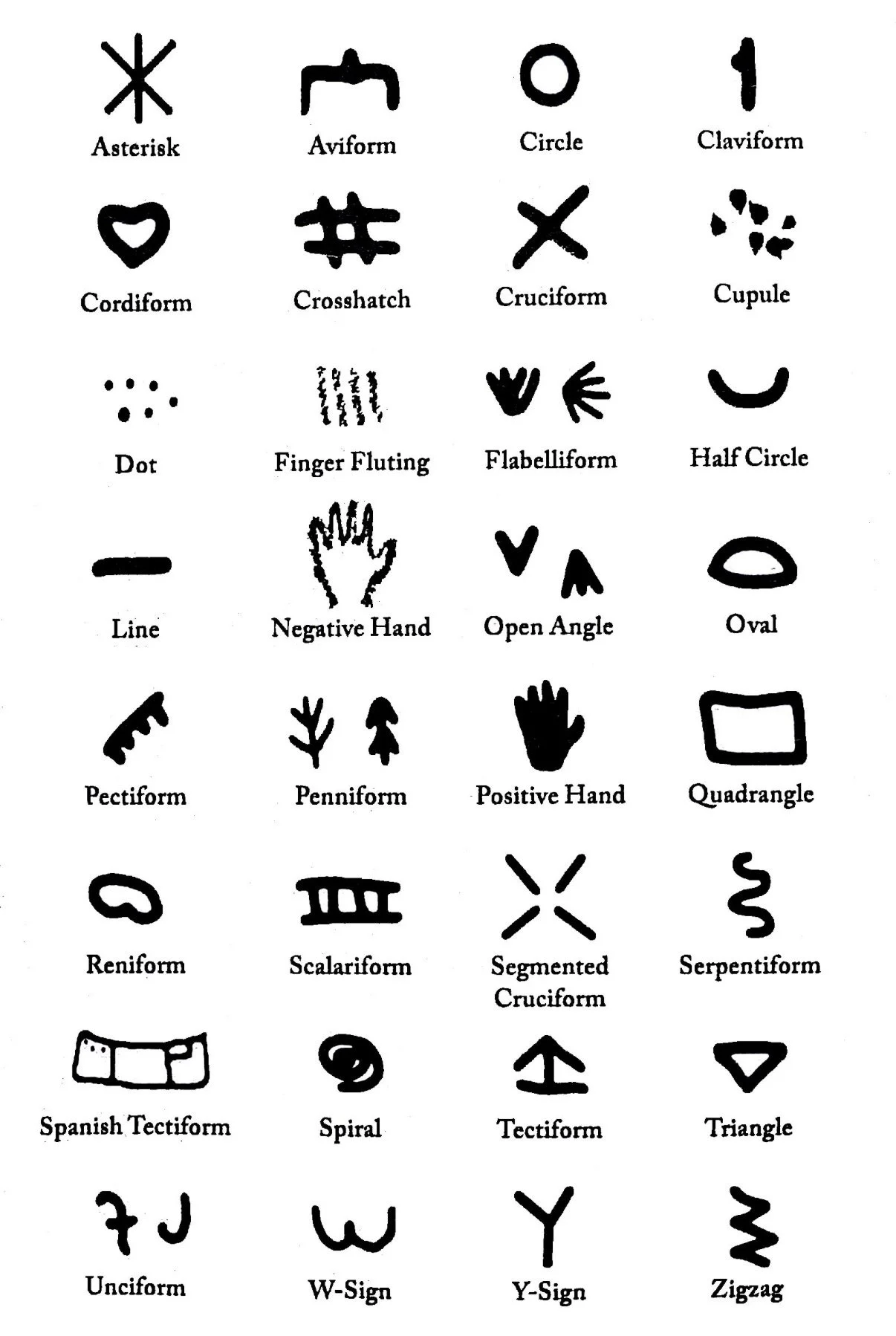
32 symbols identified by paleoanthropologist, Genevieve von Petzinger as proto-alphabet
We don’t know who first pressed red ochre to the wall of a cave leaving marks to be understood by someone else. We have no name for the artist, the shaman, or the teacher who repeated those marks again and again throughout southern France, northern Spain, and further east. The signs and the information they communicated reappeared over great distances spanning thousands of years.
Who were these visual communicators? That was the starting point for my newest sculpture. Its working title is Anonymous.
The character: The sculpture stands 16 inches tall on a carved marble base. The figure has the head and legs of a bird. Antlers rise from its head. A wind-blown cape surrounds the forward-leaning figure. And around the perimeter of the cape, rendered in red ochre, are 32 symbols.
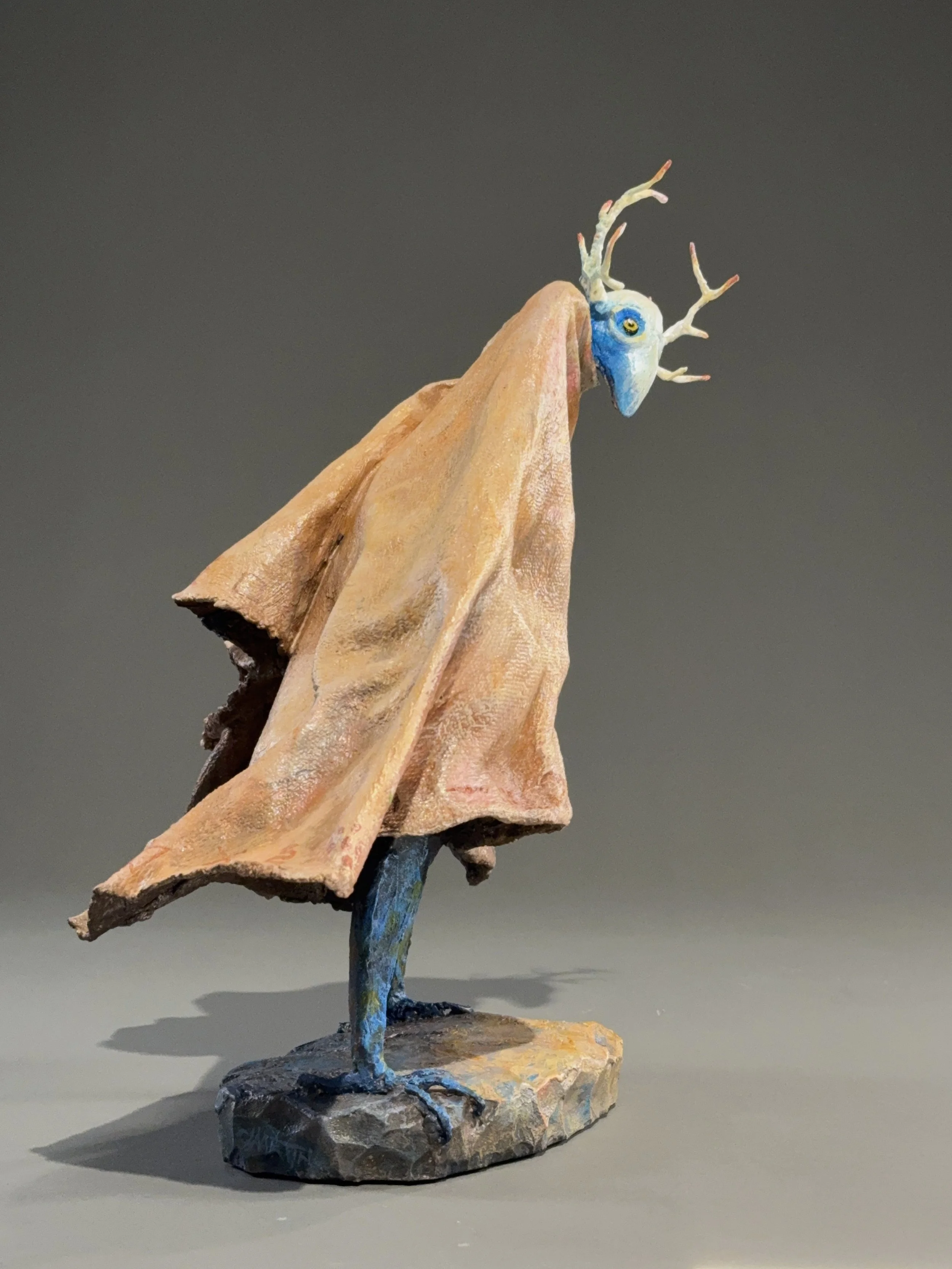
“Anonymous” is a Therianthrope, part human, part animal, perhaps a shaman taking on the character of a messenger.
I didn’t invent these symbols. They were identified in the research of paleoanthropologist Genevieve von Petzinger. Her book The First Signs documents a set of 32 geometric signs: dots, crosshatches, spirals, ladder shapes, and more. The same signs appear again and again in caves separated by vast distances. They suggest something remarkable: a shared visual vocabulary used with intention long before anything we recognize as writing existed. It is a proto-alphabet, the first evidence of humans agreeing on what a mark should mean.
I first encountered von Petzinger's work several years ago on a Ted Radio Hour episode. I immediately bought her book which I have now read three times. I studied Visual Communication decades ago at Pratt Institute. Symbols, signs, and graphic communication have been the foundation of my career. Her research has exponentially deepened my appreciation for how and what we communicate. It’s astonishingly how old the impulse to make them really is.
Why a bird-headed, antlered figure?
Sometimes images resonate with us beyond our ability to explain their attraction. Among them are combinations of human/animal forms, a recurring thread running through many of my sculptures. The hybrid figure, part bird, part antlered animal, part human, like the symbols, is not my invention. Therianthropes — human-animal composite figures — appear throughout Paleolithic art. It appears in the famous "Bird-Headed Man" at Lascaux. They seem to represent something far more powerful than ordinary people: shamans, spirit guides, or intermediaries between the human world and the grand mysteries.
I imagine my figure as one of many intermediaries — a teacher, unnamed and unrecorded, who carried this visual language from cave to cave and from one generation to the next. Probably not the inventor of the symbols, but the communicator. Someone whose work outlasted their name by tens of thousands of years.
Mixed media sculpture on a carved marble base with the 32 symbols painted in red ochre around the perimeter of the cape.
An anonymous inheritance. We will never know who made these first marks, or precisely what they meant to our ancestors. That anonymity is not a gap to be regretted so much as it is the subject itself. It's astounding to encounter a body of human expression this old, this widespread, and this legible in its intention. People were communicating information deliberately and repeatedly across a scale of time that redefines recorded history. Yet the makers themselves remain completely unknown to us.
Anonymous is my attempt to give that unnamed lineage a body: bird, stag, human, teacher, all at once, wrapped in the very signs that have outlived every hand that ever drew them.
The 32 symbols referenced here are drawn from Genevieve von Petzinger's research, published in The First Signs: Unlocking the Mysteries of the World's Oldest Symbols.