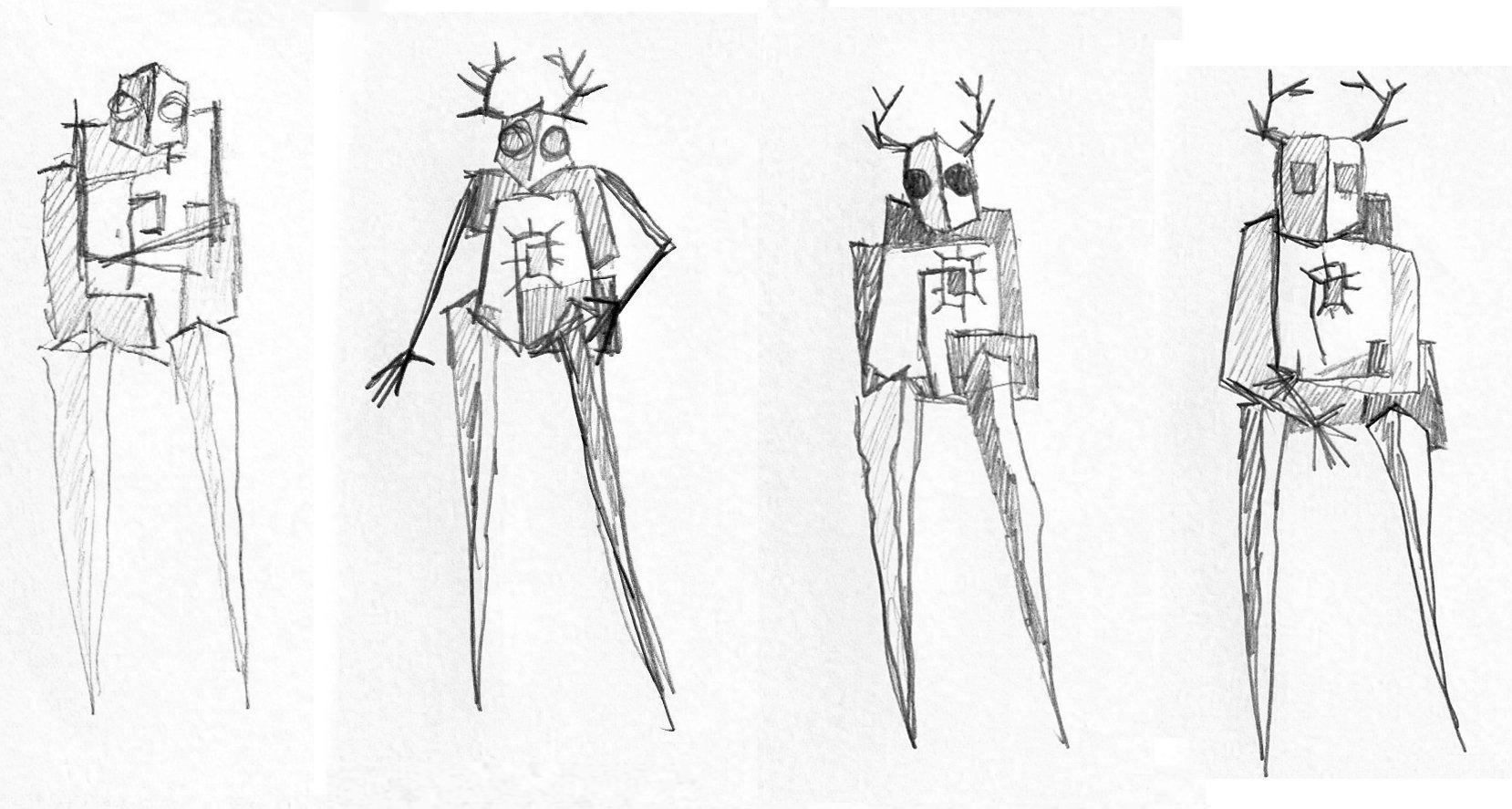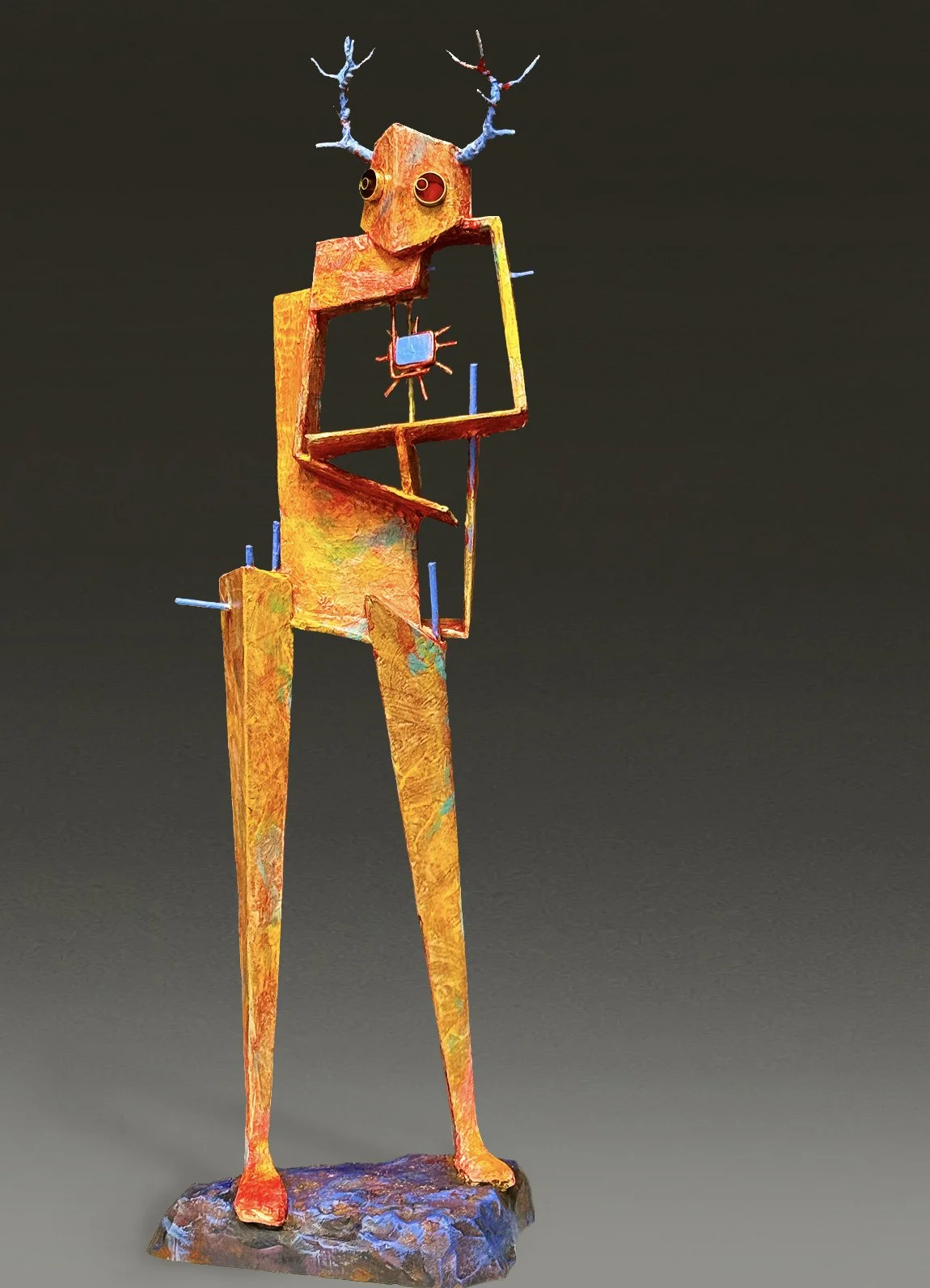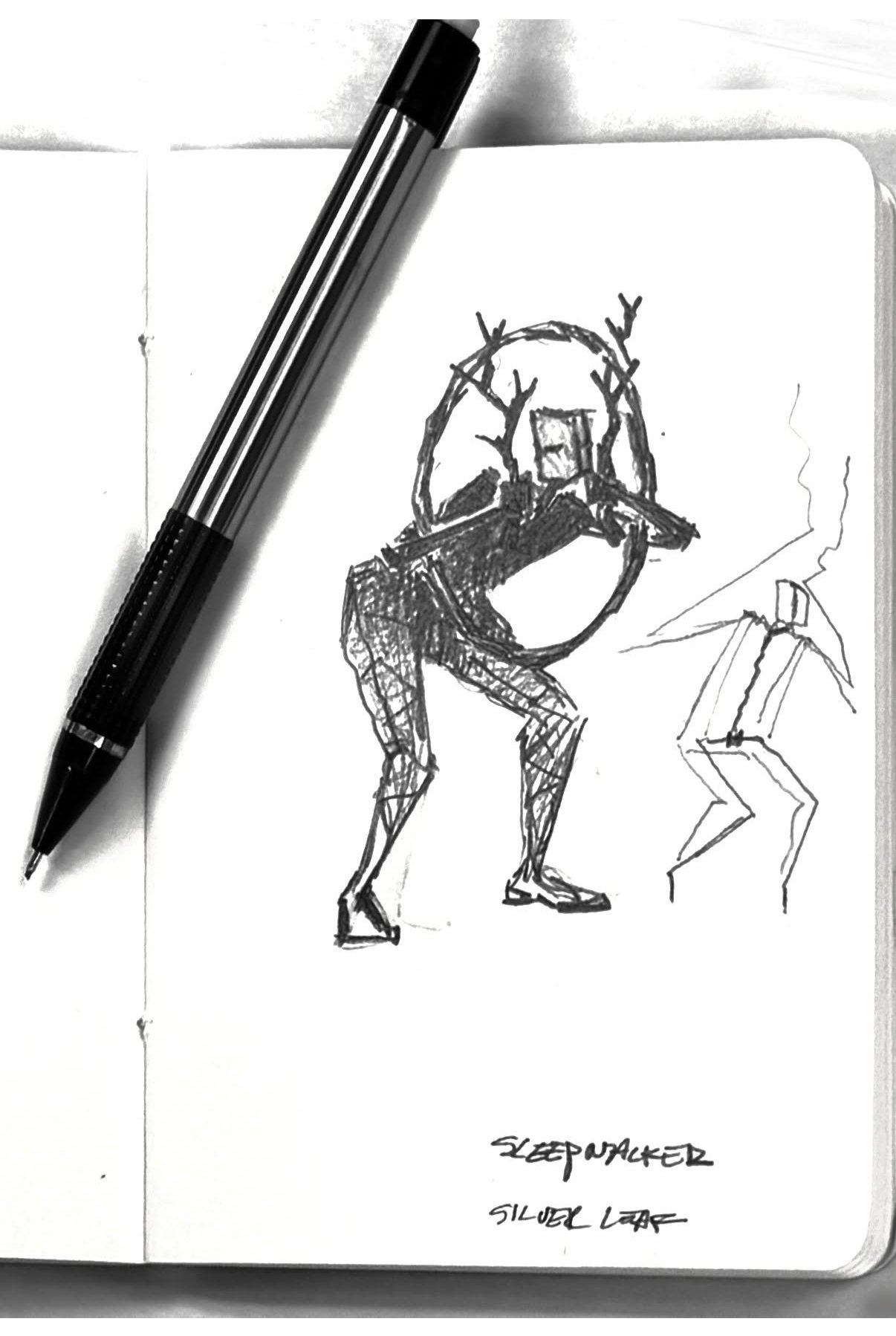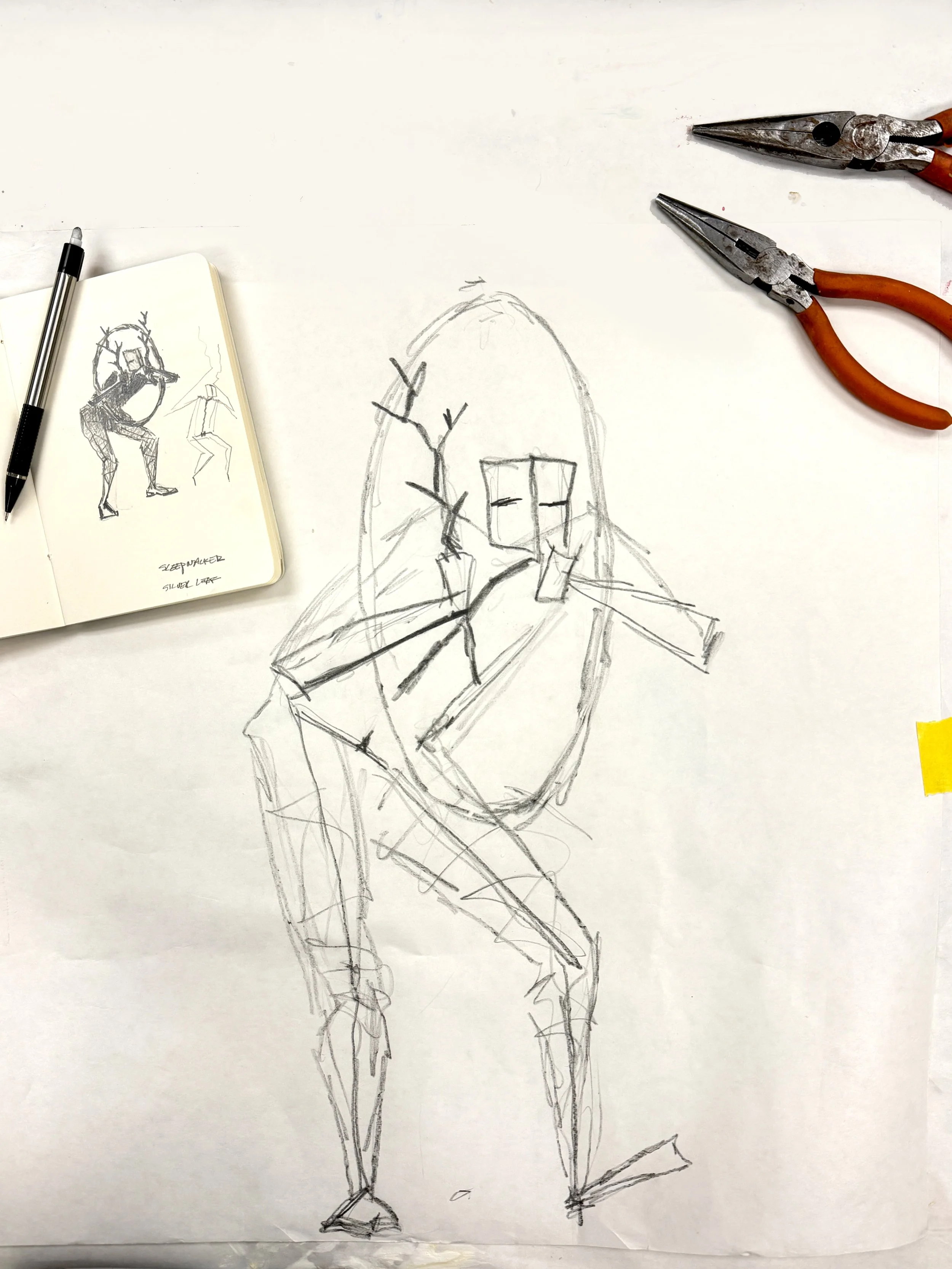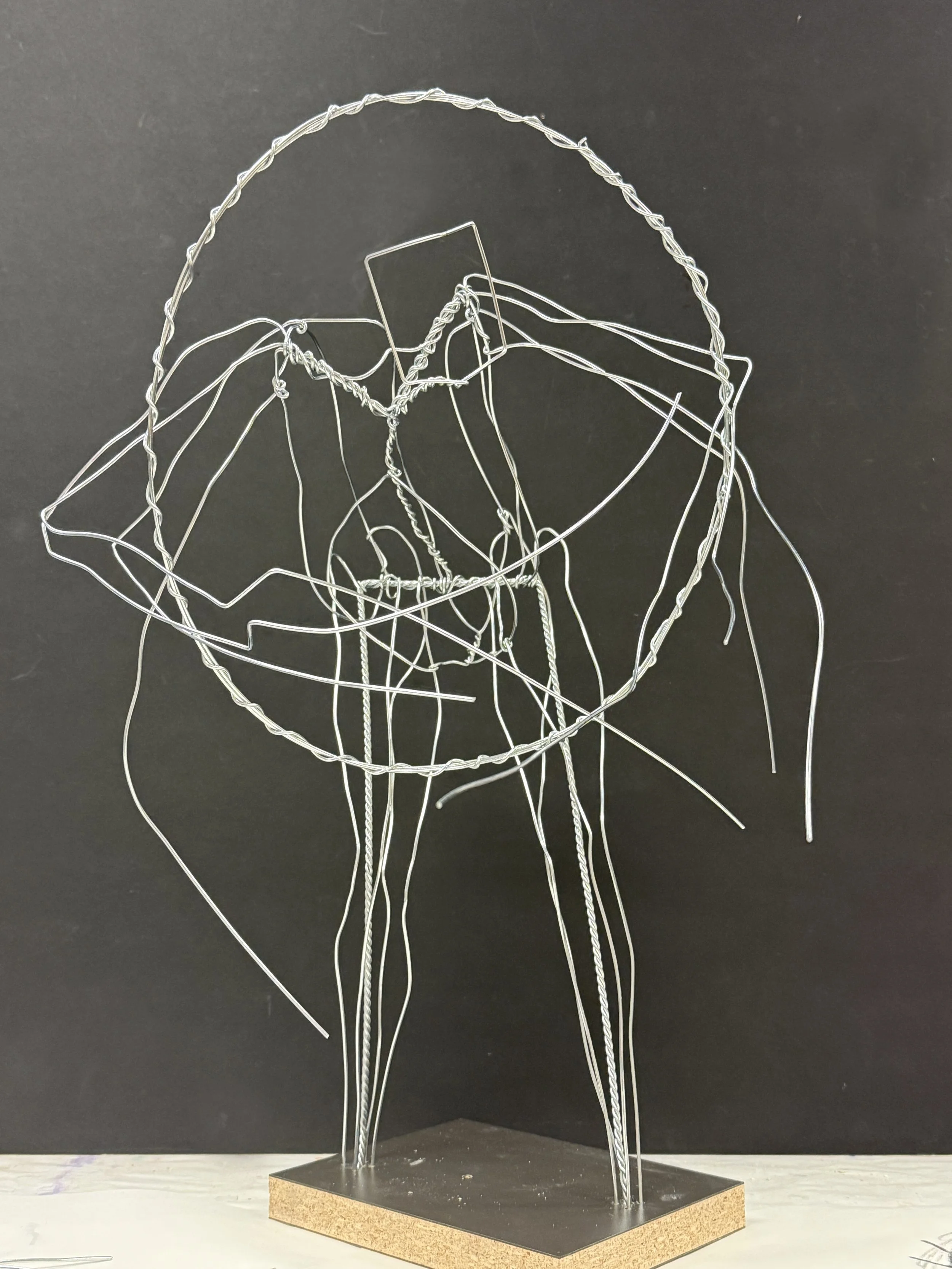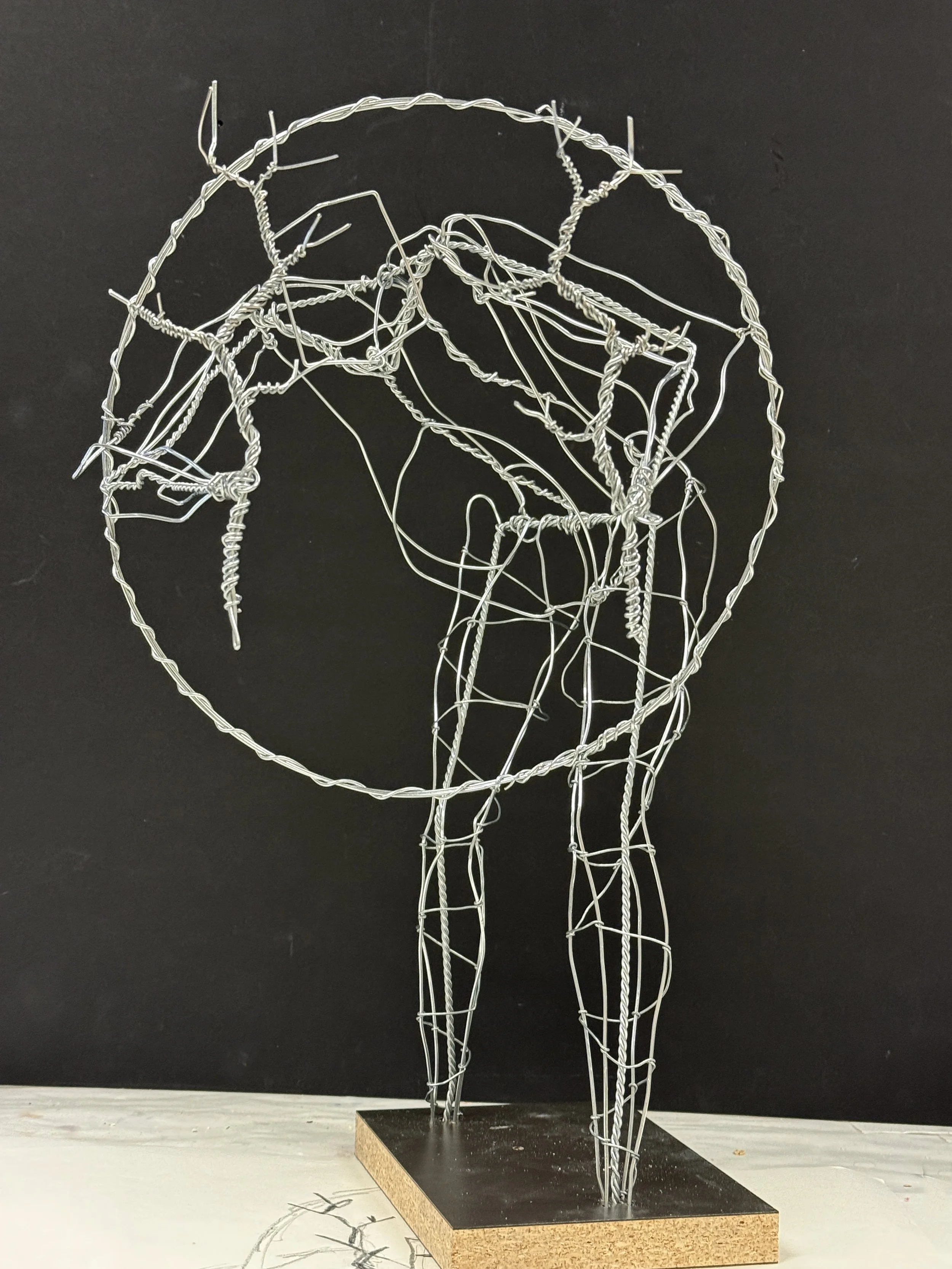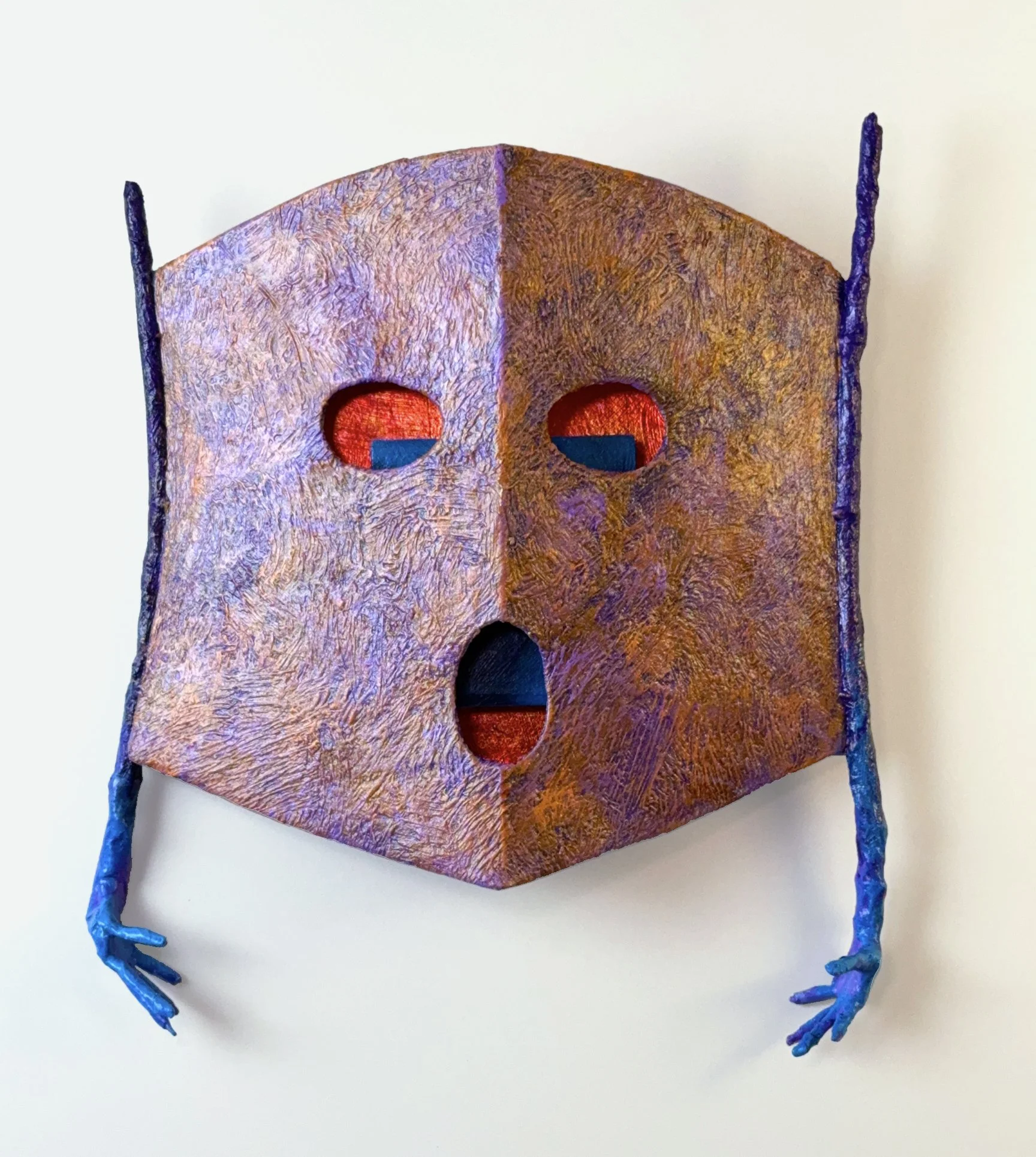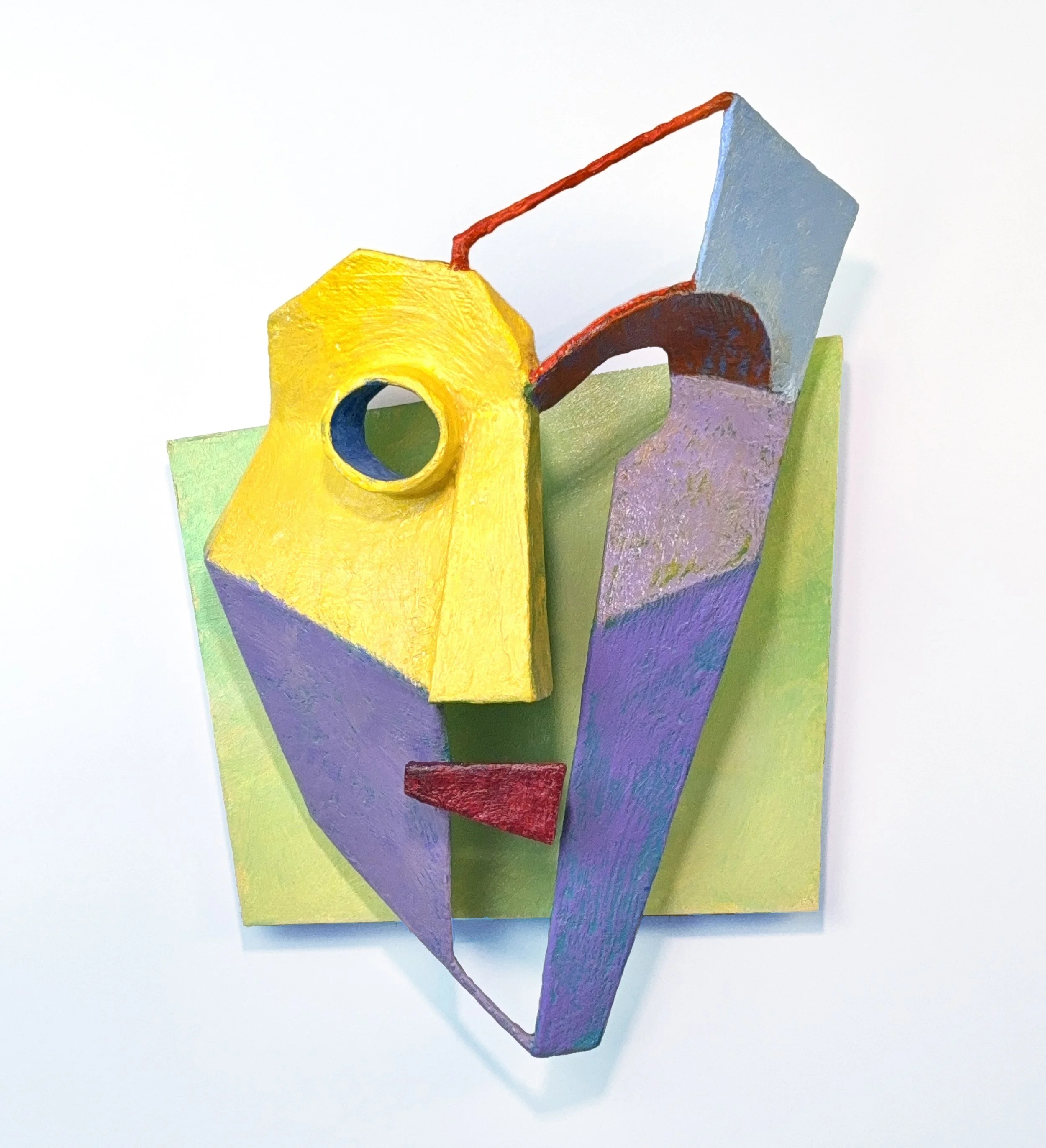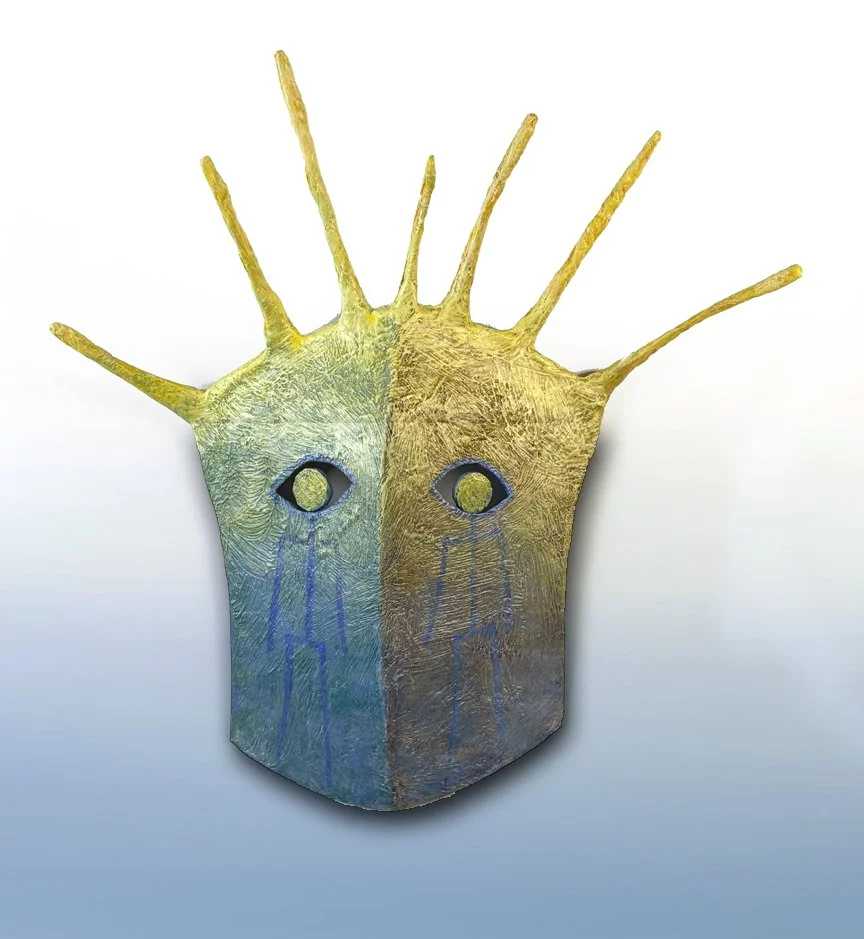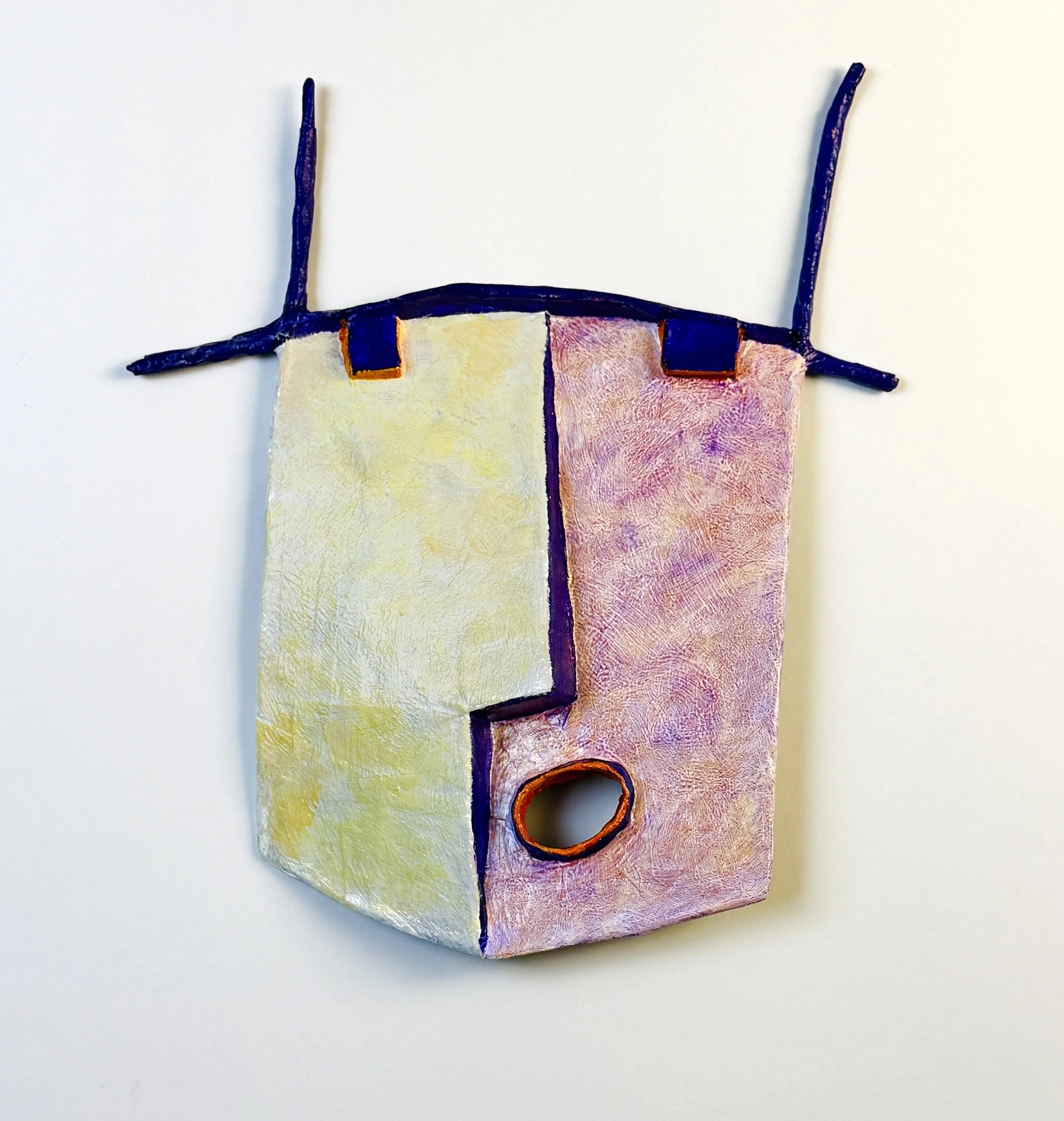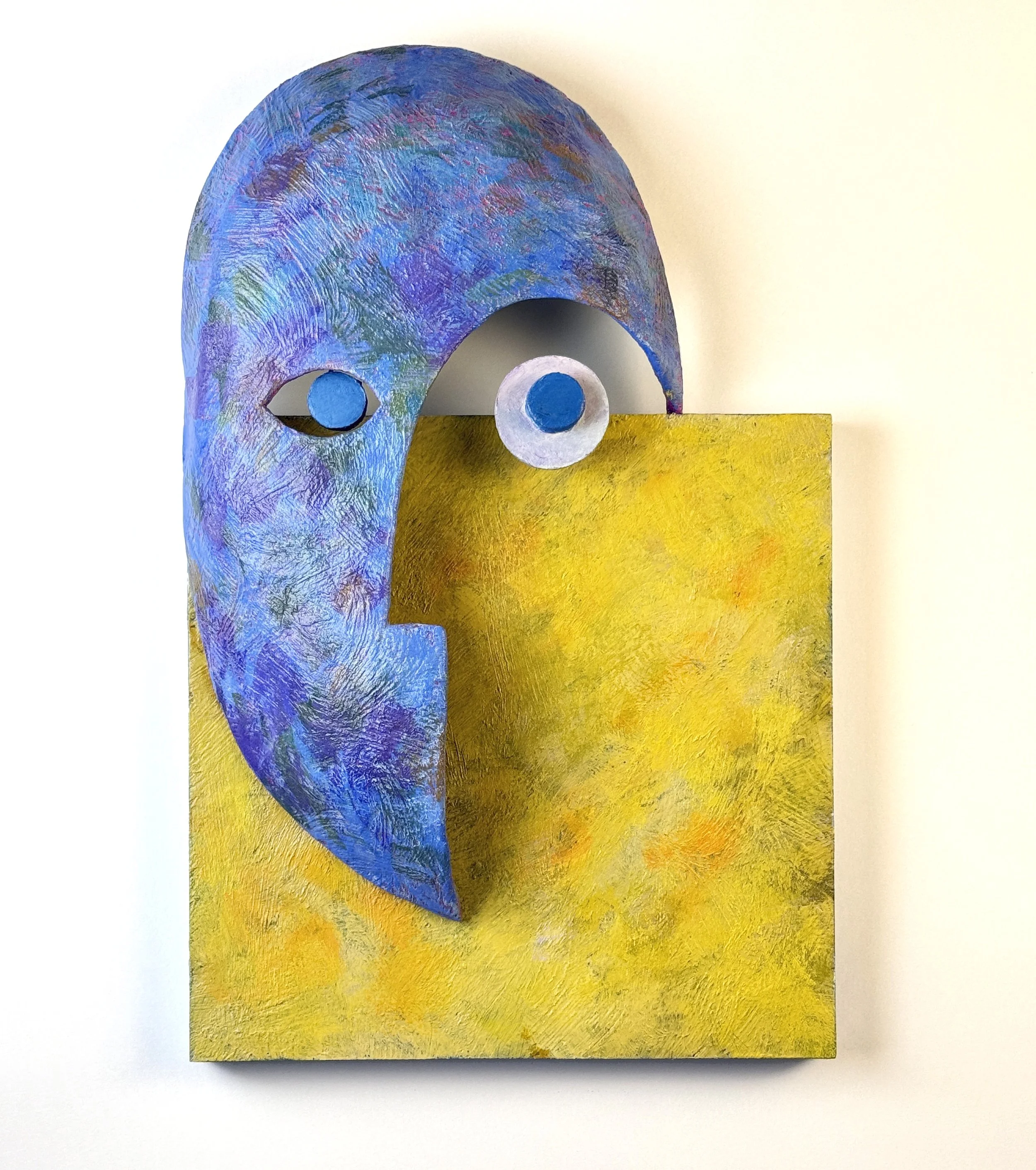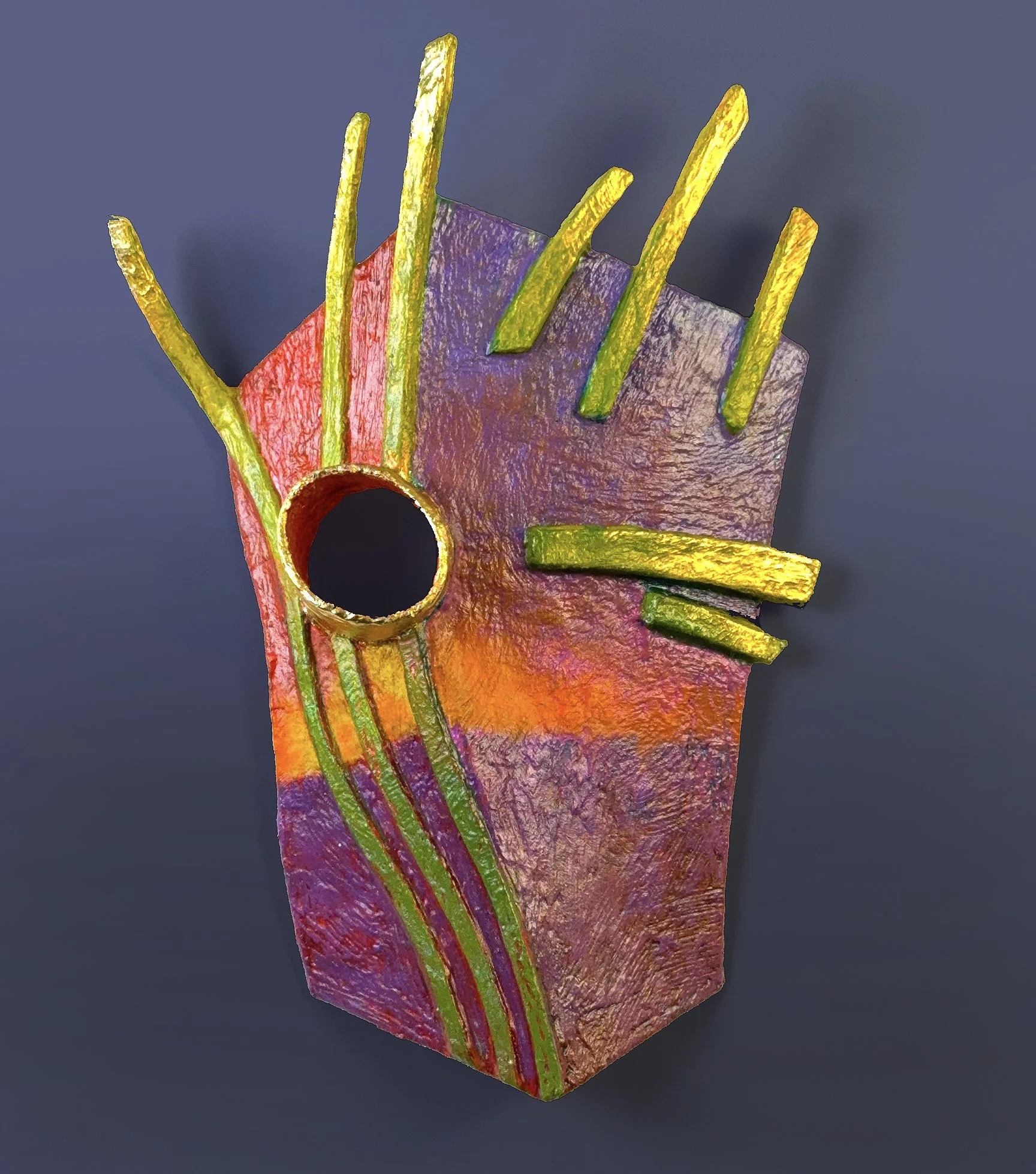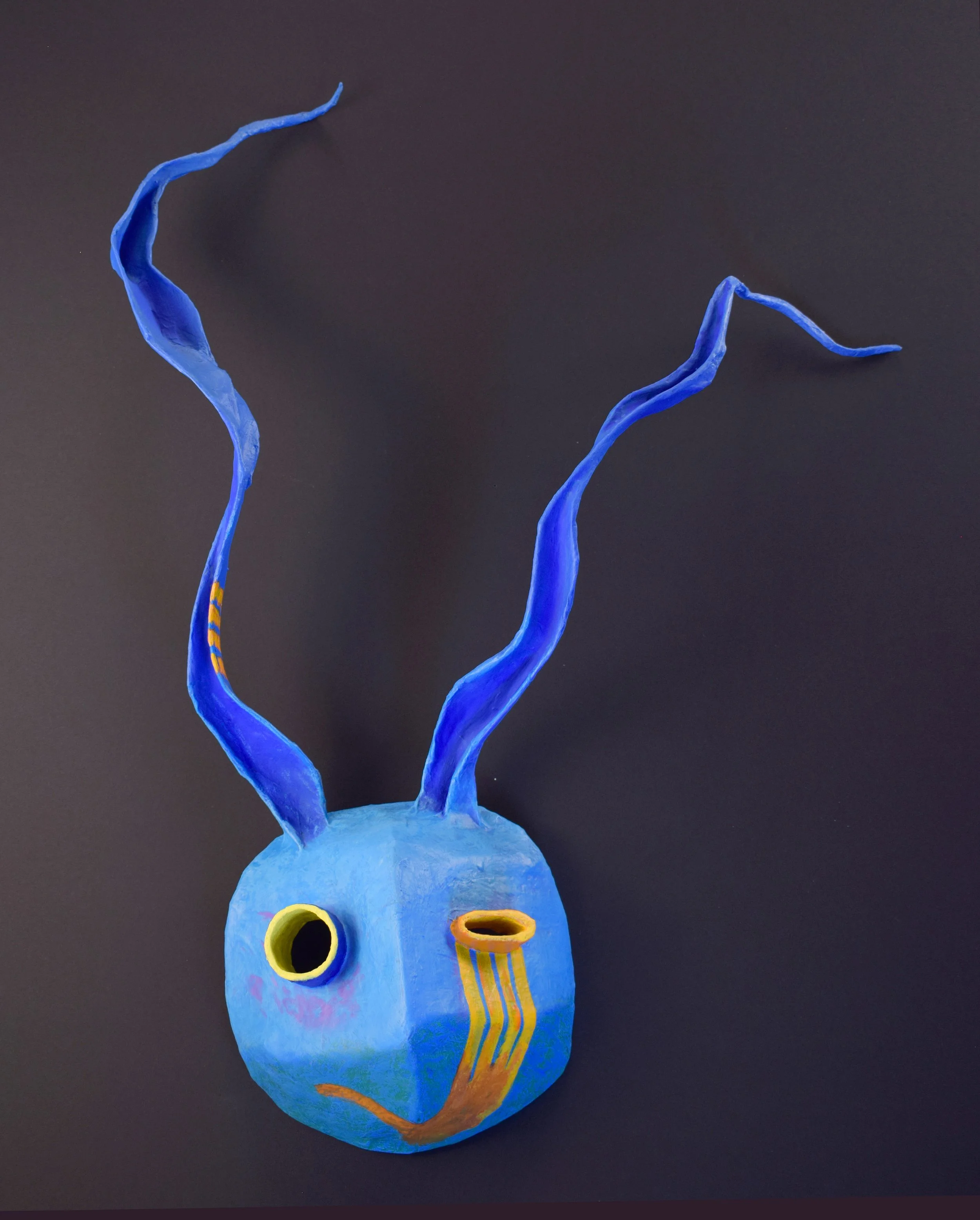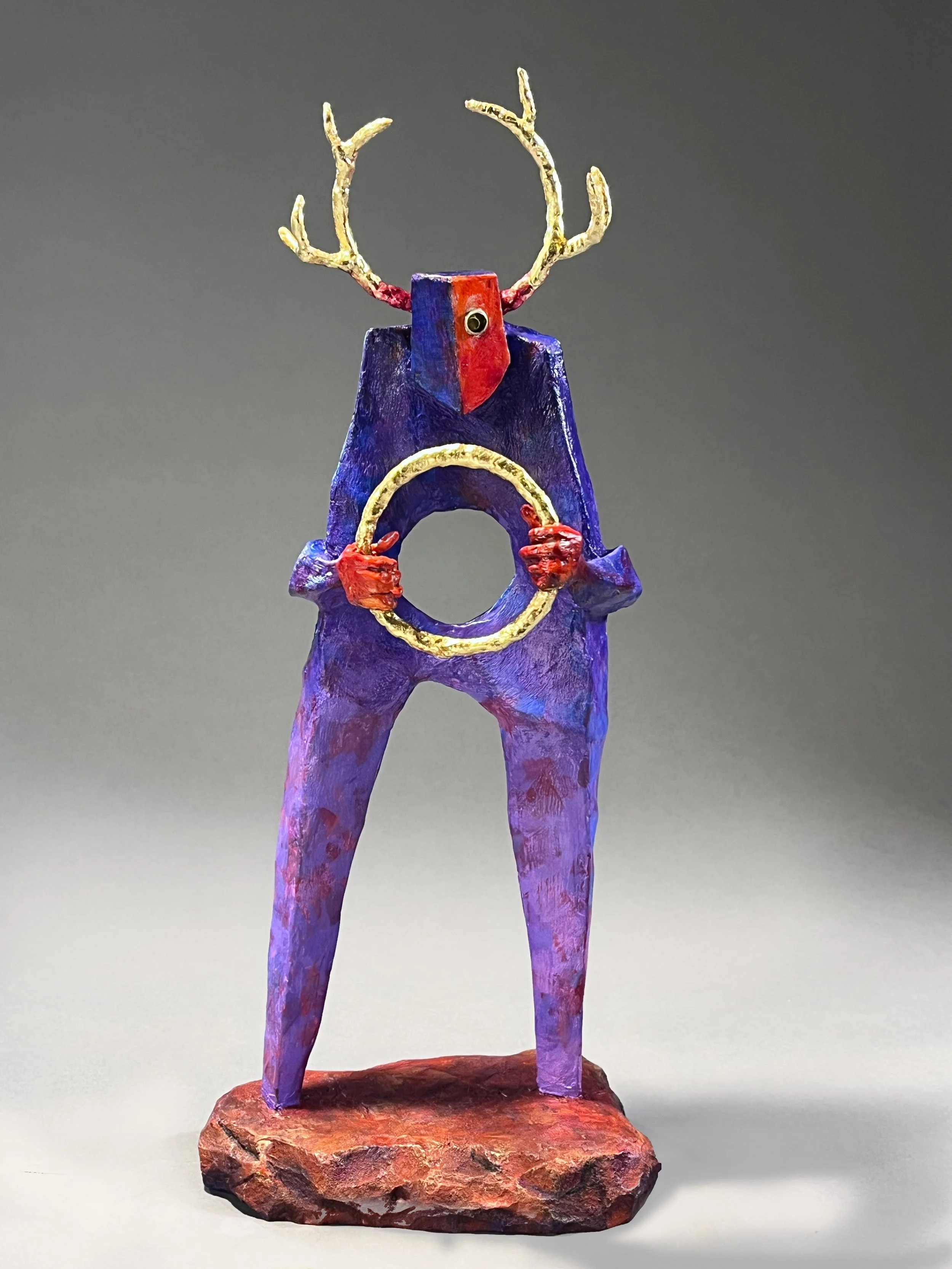
Join me in my studio via Zoom on June 11 and 12 from 12 to 2pm during Artburst "Weird" Show

“Weird” is a unique 3-day virtual show of works by a dozen great artists from across the country.

Here are a few helpful tips about the show:

HOW IT WORKS

PREVIEW THE SHOW

MY WORK

During the event, I’ll be hosting live studio visits via Zoom on both Thursday and Friday from 12 noon to 2pm PST.

Drop in any time to see what I’m working on or ask a few questions. I’m happy to answer and show you around the studio.

Fill in the form and you’ll get the link and password on the next screen.


Synchronicity and the Creative Process: What Eight Years and Three Crows Taught Me

I came to my studio eight years ago in a mood. Not the best state for creativity, but I've learned that frustration can foreshadow breakthrough. That day I built the armature for a crow sculpture — three archetypal figures, crow heads and wings on human-like bodies huddled around a fire. Forty-five feet of wire and a few hours of work.

It sucked. The bodies weren't right. Too clumsy. So I shoved it under a table. Every few months I'd pull it out ready to cut it up, salvage what I could, and move on. But I never did.

This week I pulled it out one more time, hacksaw in hand. What if I added tails?

That's all it took. One simple question. The tails provided grace. Some added girth for the bodies and a few changes to the heads created a unifying feel. The crows were showing me what they'd wanted all along. I just hadn't listened.

This is the sculptor's dialogue. I am not in control. I am an active conduit. So I keep asking "What if?" — day after day. Or in this case, year after year, until the right answer arrives. Forcing it never works. Patience and genuine curiosity do.

Carl Jung described synchronicity as meaningful coincidence that logic can't fully explain. This week it arrived with an added bonus. I came home from the studio and rediscovered an old blog post I'd written the very day I built that original armature. There it was — the mood, the frustration, the forty-five feet of wire, the frustration at the end of the day. Eight years ago I wrote about beginning this piece. This week I finally understood it.

I shouldn't have been surprised. I walk past neighborhood crows every day on my way to the studio. I've watched them for years — their tricks, their chatter, their sharp and patient observation of everything around them. They notice what others miss. They communicate in a language not everyone can read. Three of them huddled around a fire, wings across each other's shoulders — sharing a moment that belongs only to them. A secret. An unanswered question. Which is exactly where the most interesting things live.

Jung understood that archetypes speak in their own time, through symbols and patterns older than language. The crow is one of those symbols — trickster, messenger, keeper of what is hidden. I didn't choose them for those reasons. They chose the work. And then they waited, patiently, until I was ready to listen.


Things get Weird at Artburst Studios

Artburst Studios presents “Weird” a unique, virtual 3-day online show.

THE DETAILS:

The show opens Thursday, June 11 at 9am PST and runs through Saturday, June 13 at 3pm PST. You can preview the work 24 hours in advance, but no purchases until Thursday morning. Most sales happen in the first few hours. If you’re interested in a piece, register before the show opens.

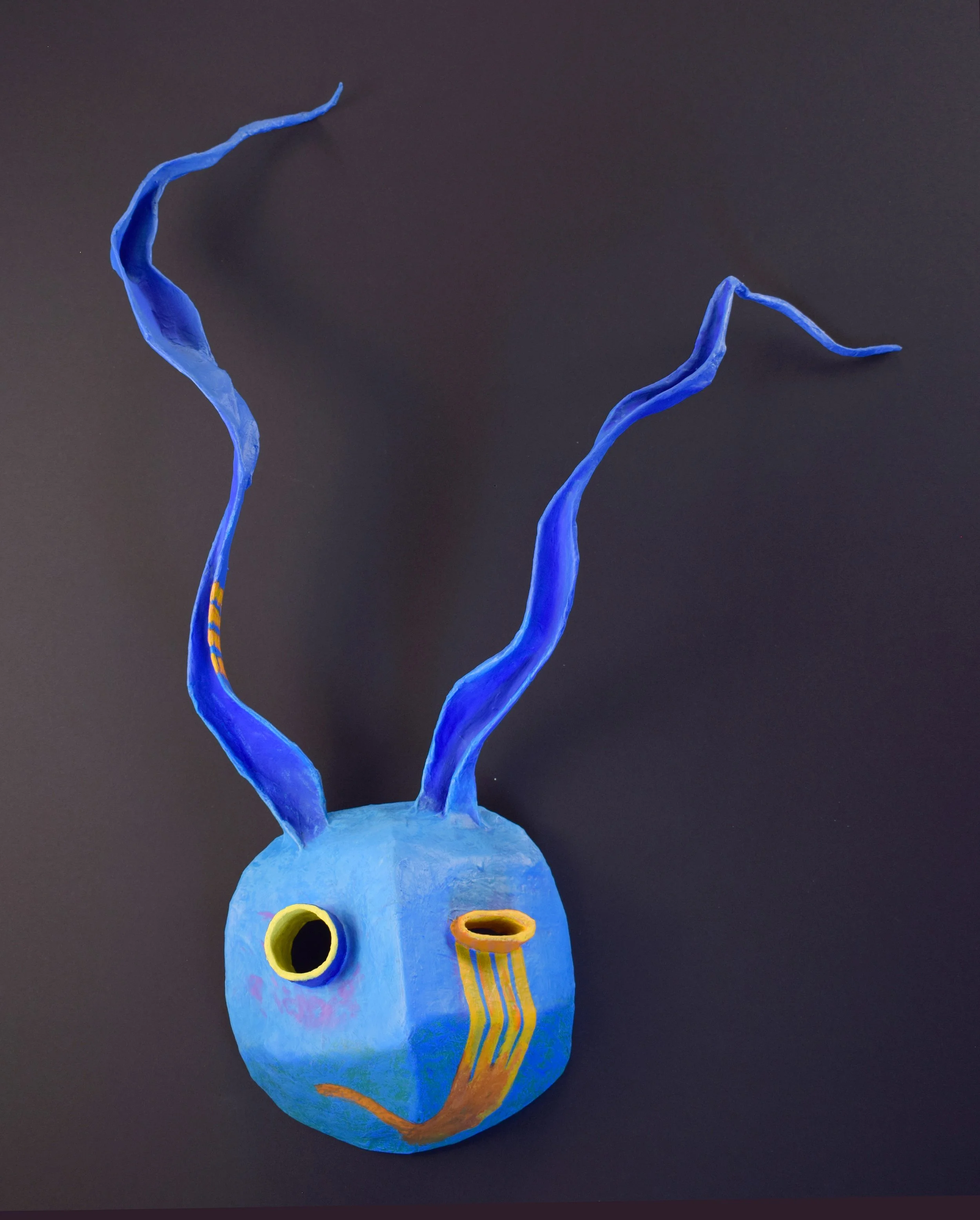
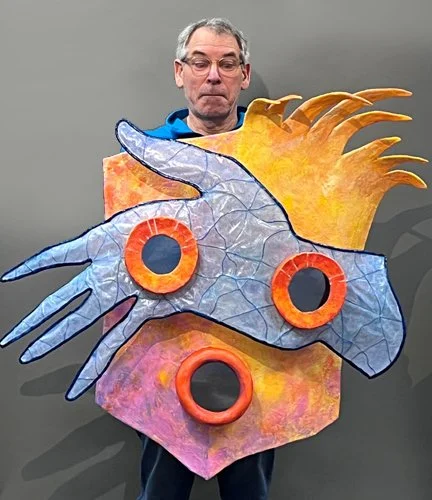
Weird describes most of my work. My masks are imaginative exaggerations of human qualities — the hidden, the shadowed, the parts of ourselves we don't always put on display. The Jungian Shadow. The face behind the face. If that isn't weird, what is?

The Power of Masks to Amplify Archetypal Qualities

Jungian archetype mask

“Patience” was the first mask in an ongoing series.

It started with a sculpture I had just finished. I really liked the head, but it was only an inch and a half tall. So I made a life-size mask of that face. Bang! A personality was staring back at me.

That experience several years ago was the beginning of a new path that still intrigues me.

Masks are among the oldest human objects. Nearly every culture has created them — ritual, theater, ceremony, transformation. African masks channel ancestral power. Japanese Noh masks convey spiritual states. Greek theater masks that let a single actor embody tragedy and comedy, hero and villain. The variety is endless, but the underlying idea is the same. A mask allows something larger than the individual to speak. There’s always something to be discovered.

My masks are built from corrugated board, paper, wire, polymer, and acrylic paint — humble materials that somehow insist on becoming characters. I don't create these characters so much as find them in the process. As a mask develops, its voice gets louder and clearer. It is like telling and listening to a story at the same time.

The themes that I explore are Jungian at their core. The Shadow — that hidden other side of the personality that Jung identified as the part of ourselves we least acknowledge — appears frequently. So does transformation, made visible by treating both halves of the face differently. One eye open explores the external world. One eye closed focuses inward. A single face holding two truths simultaneously.

These are not decorative. They are archetypal characters — imaginative exaggerations of human qualities that live in all of us. They don’t hang passively on a wall. They watch and wait. They ask something of the person looking back.

That conversation, quiet and direct, is why masks fascinate me.


Perception and Art: What You See Is What You Think

Sculpture symbolizing perception and projection, the physics of seeing versus understanding

“Presumption” is an attitude dictated by past experience or probability. A presumption is a projection of what you expect to see. What you think can limit what you see.

I have been fascinated with the concept of perception since art school. A recent detour into quantum physics (physics lite, not the deep end) explains my fascination. At the quantum level, the act of observation changes the observed. The viewer is never separate from what is being viewed. That idea has never left me.

But there is more to it than physics.

The brain is a supreme pattern-matching machine. Neuroscientists call it predictive processing — the brain doesn't passively receive visual input, it actively predicts what it expects to see based on everything it already knows. New information gets matched to the nearest familiar pattern and filed away accordingly. Efficient, yes. But it means we rarely see what is in front of us. We are seeing our own mental library.

Perception, in that sense, is projection. We see what we expect to see. Our experiences, associations, and assumptions arrive before we do.

I watch this happen in real time when people encounter my abstract sculptures. There are distinct layers of how people perceive them. The first is often playful — my bright palette and dynamic forms are disarming. The second is intrigue. Each piece poses an unanswered question that resists quick interpretation, and the brain, denied its easy pattern match, keeps looking. The third layer touches something deeper. This is where the body responds before the mind catches up — a posture shift, an unconsciously mimicked gesture, a step back and crossed arms as something unexpected surfaces. The viewer is no longer seeing from intellect but from somewhere deeper. This is the Jungian archetypal level, where personal experience connects with universal patterns. The fourth layer is conversation. My pieces often prompt viewers to share what they have just felt — that moment of communication sparked by art reaches past the here and now to the timeless.

What I hear most often is this: "The more I look, the more meaning I see."

That is not coincidental. My unanswered questions are not a stylistic choice — they are a perceptual strategy. I am not trying to communicate a specific message. I am trying to slow the viewer down long enough for something genuine to rise from their own depths. The sculpture provides the threshold. The viewer brings everything else.

This is what makes art different from information. Information satisfies the pattern match process. Art interrupts it. It slips past the brain's predictive reflex and reaches something older and quieter. It speaks to what you have always known but rarely pause to consider.

The act of observation changes the observed. At the quantum level and in the gallery, it turns out, the same rules apply.

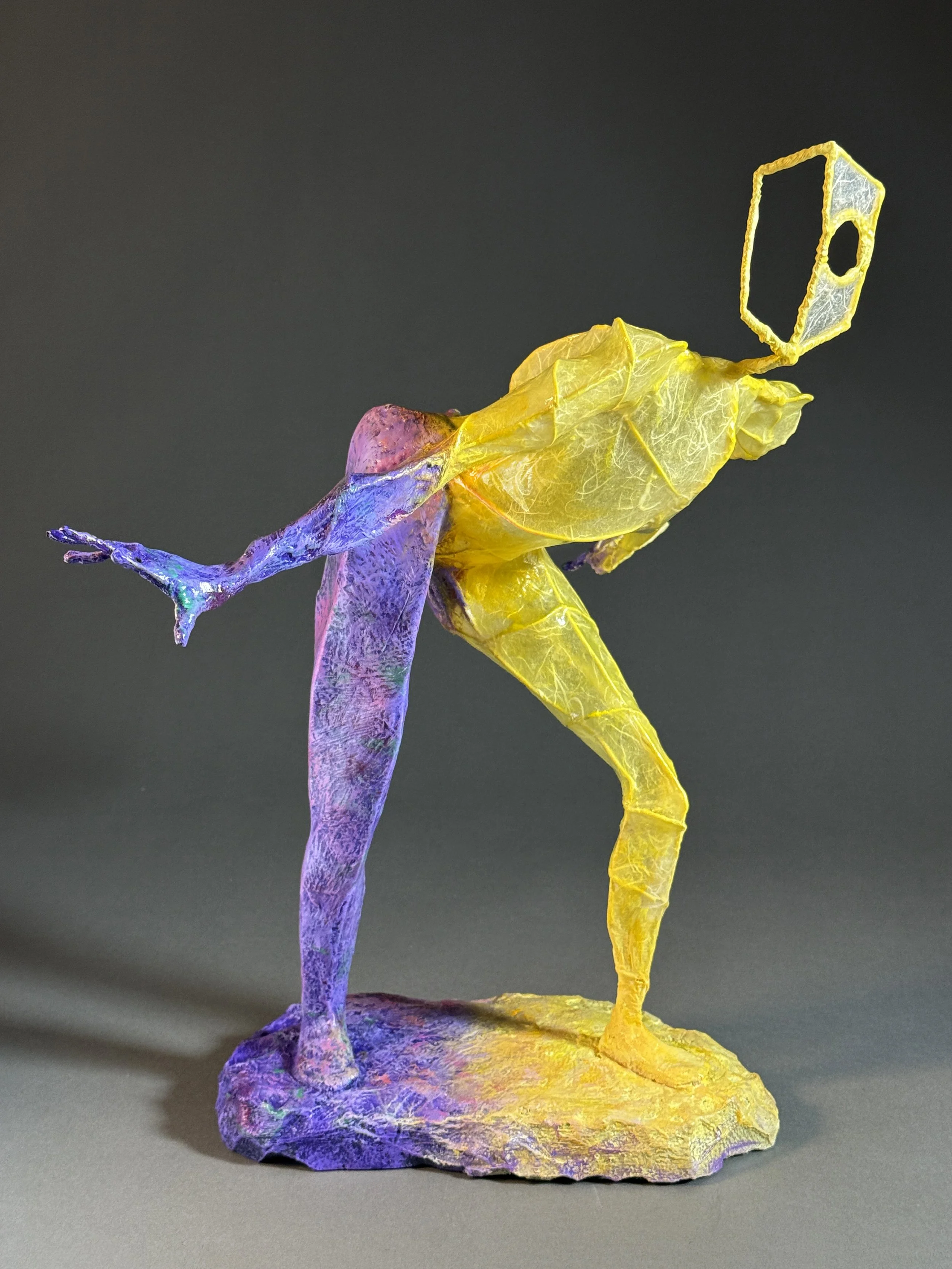
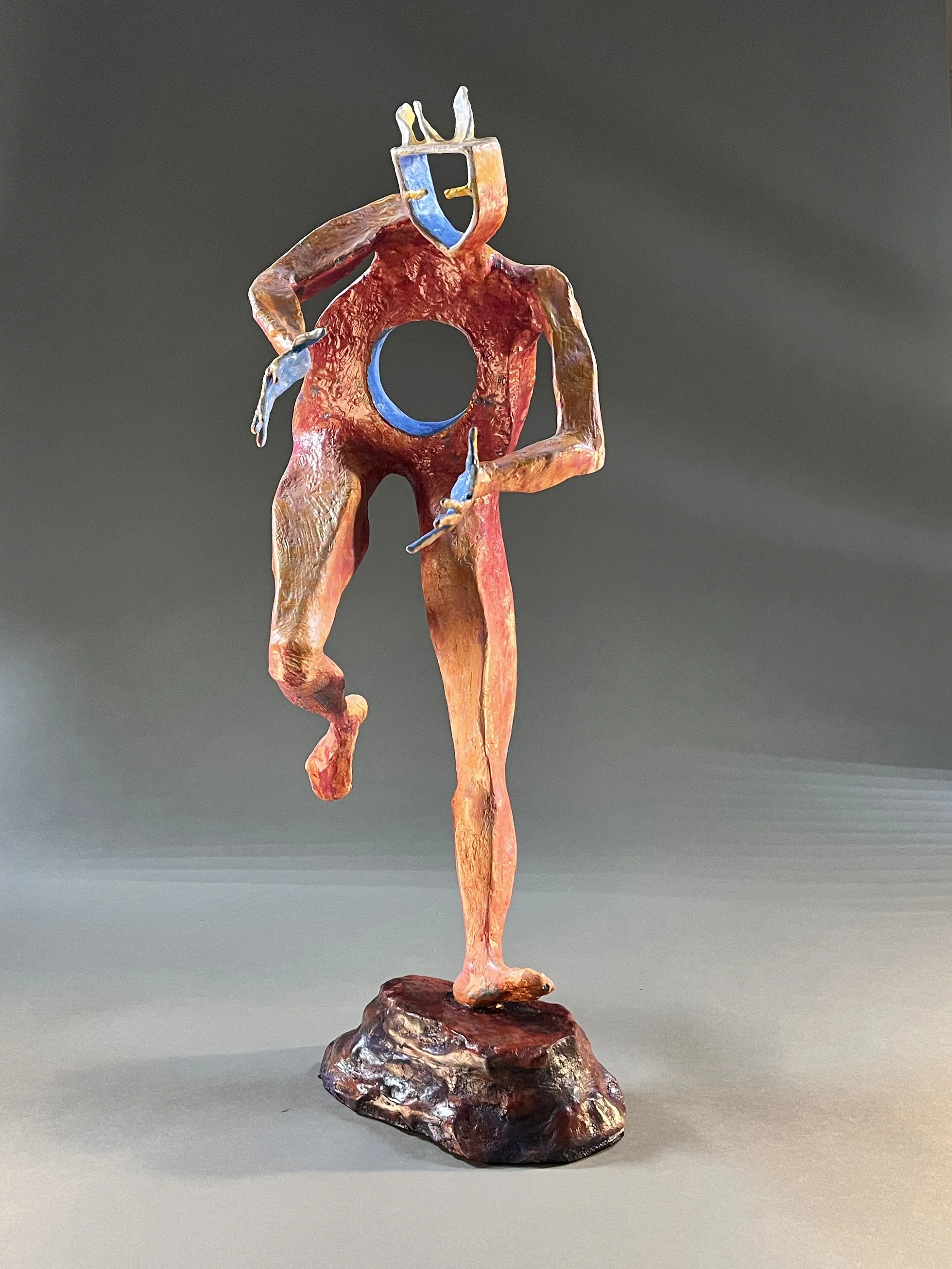
Transition through change

“Life is a process of becoming, a combination of states we have to go through. Where people fail is that they wish to elect a state and remain in it. This is a kind of death.” Anaïs Nin

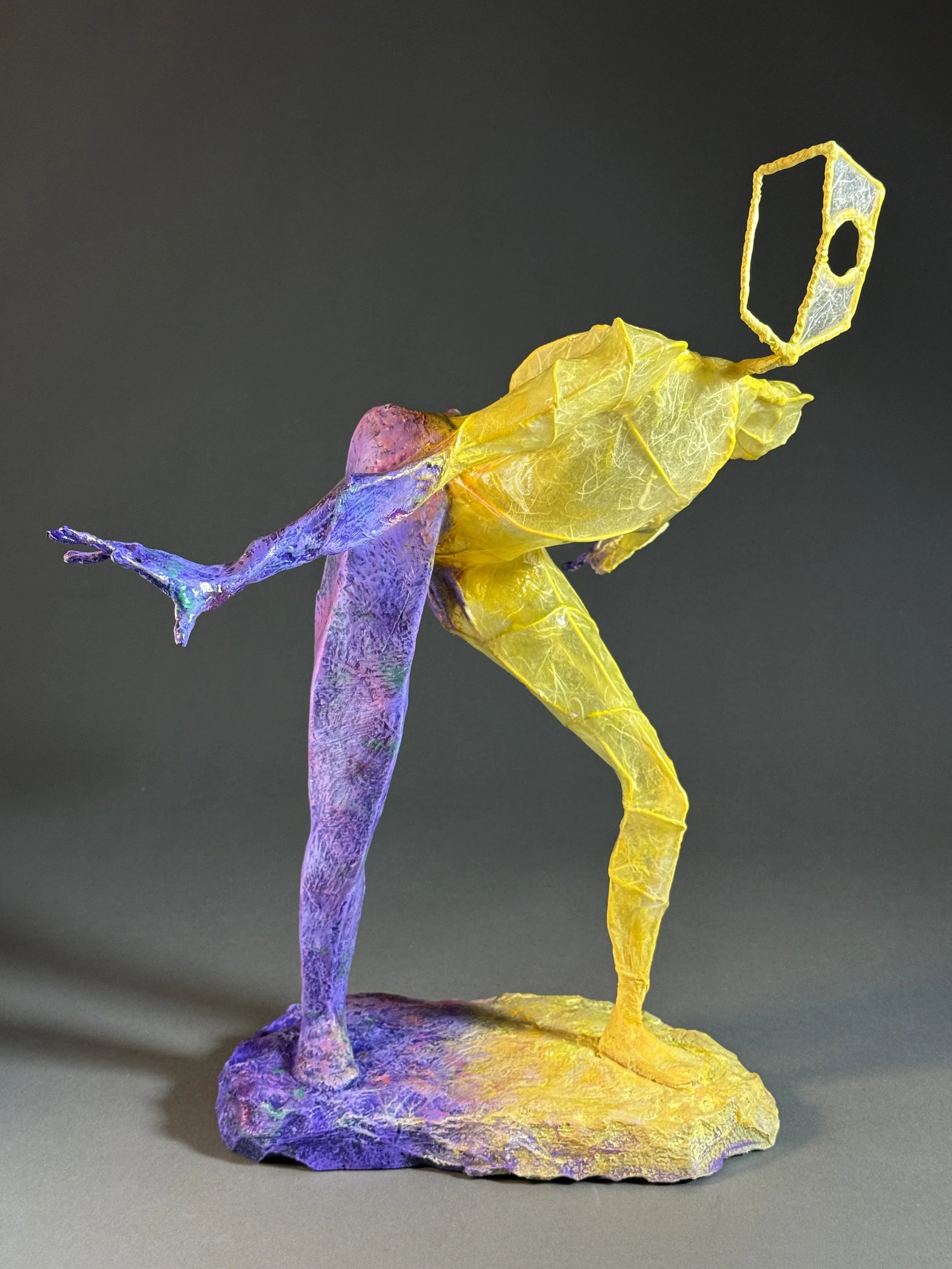
Changes are external events. They happen continuously. Transition is our internal response as we adapt to those changes. “Transition” symbolizes our passage through change – from one state to another. A time of growth, renewal, celebration, arrival. There are transitions in progress all around and within us every day.

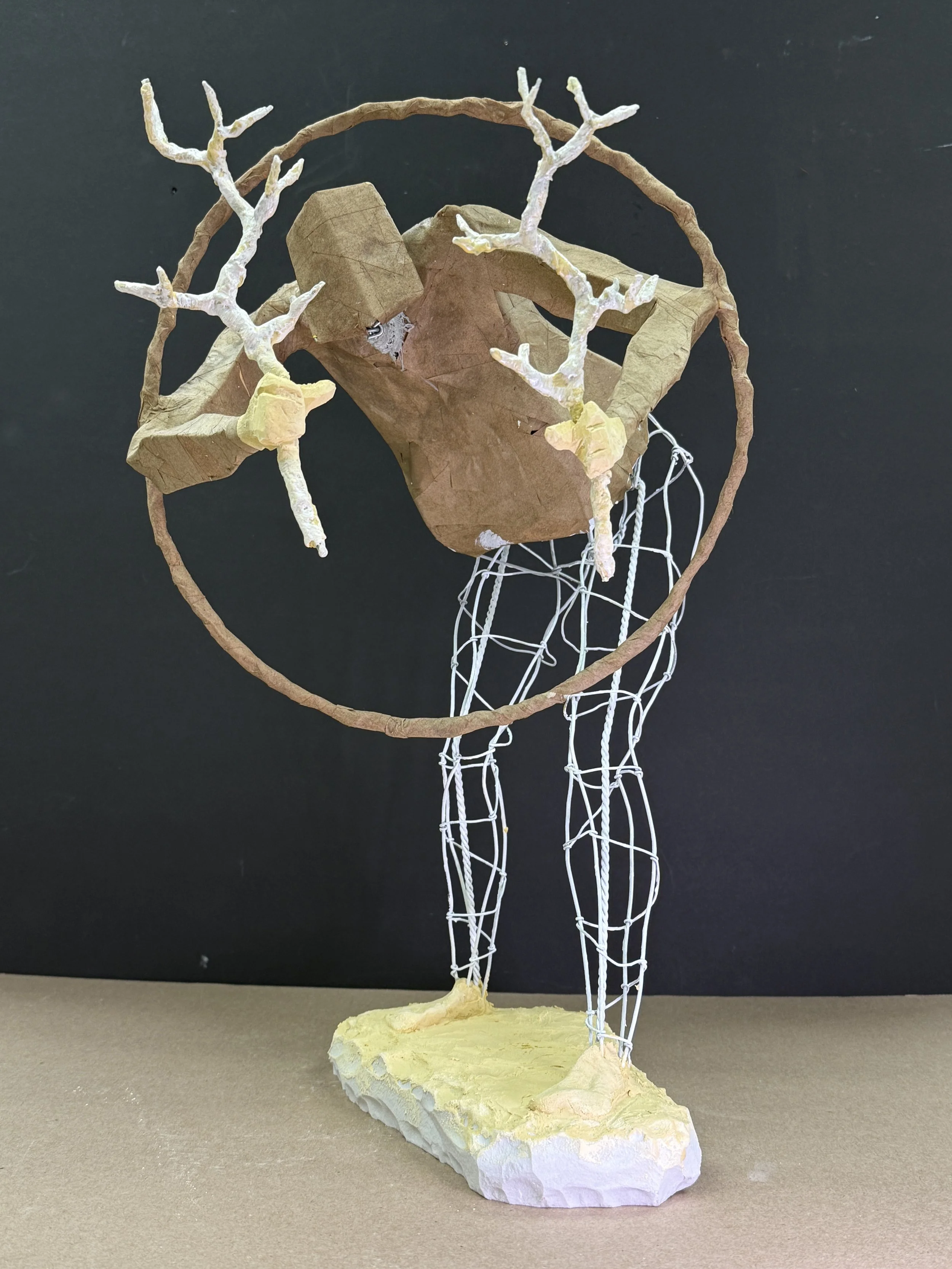
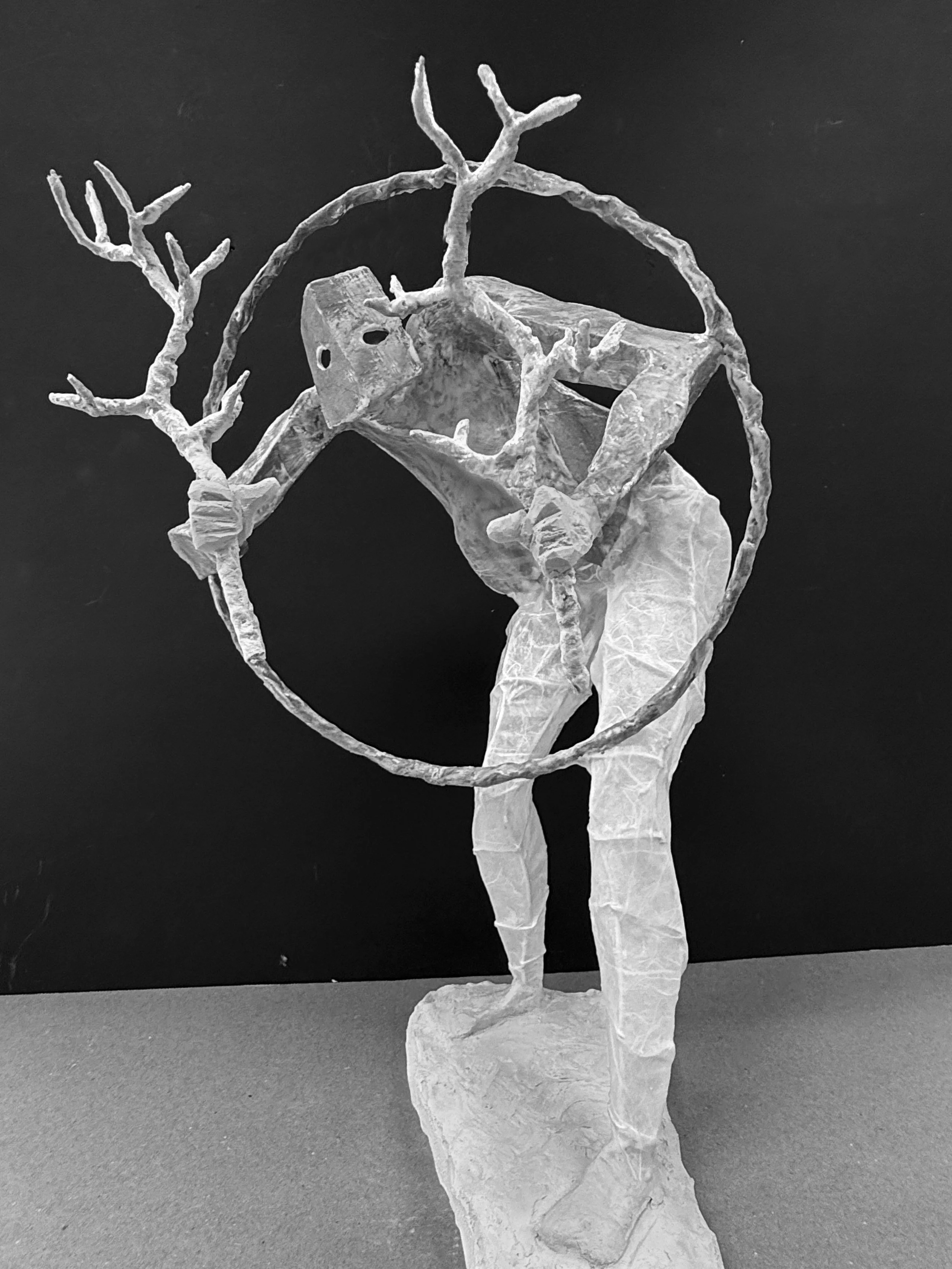
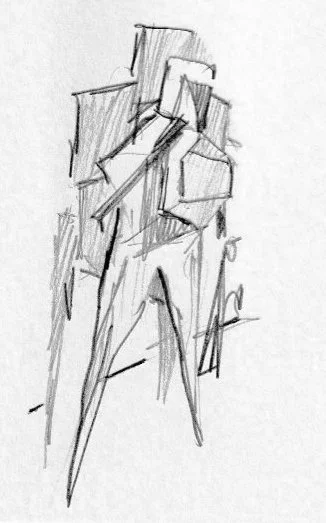
Creation of this piece progressed quickly through the sketching phase. Refining the gesture was all done before the skin was applied. The armature as a complex wire structure is basically a line drawing in space. It can be manipulated endlessly until the gesture feels right. The real challenge was how to preserve translucency of one half of the figure while making the remaining half opaque.

Transition” symbolizes the passage from one state to another. The sculpture changes from opaque to translucent as the figure makes its transition.

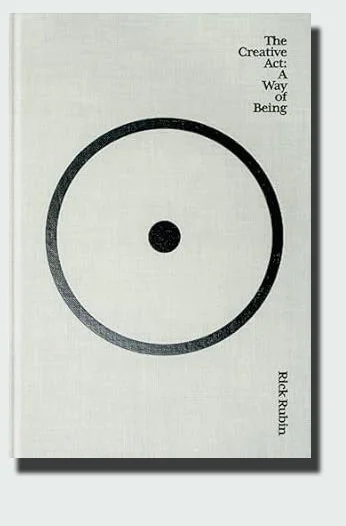
The Creative Act: A Way of Being

Review of The Creative Act by Rick Rubin

Rick Rubin is a legendary music producer who dislikes that description. He is much more than that. His recent book, “The Creative Act: A Way of Being” is not about the music business. It’s about the creative process and all the nuances that turn ideas into greatness. It is a brilliantly conceived and articulately defined description of the process.

I listened to the audio version multiple times, then bought the hard copy. Each chapter is concise with a Zen-like spareness. His reading makes each topic even more poignant. The observations, examples and advice are all delivered with humility that comes from rich experience.

There are countless books on the topic of the creative process. Most are a waste of time. This one is truly different. It is an offering of thoughtful and useful wisdom. Read it!

This short interview with Rick Rubin on People I (Mostly) Admire includes a few specific examples of experiences cited in the book.

Anima Animus - dynamics of sexual identity

Anima Animus” - the dance of our entwined personalities.

Jung’s concepts of "Anima Animus" are the hidden feminine within men and the hidden masculine within women. They exist in dynamic balance within the collective unconscious, a domain of universal experiences and archetypal knowledge we all share.

We have a dual-sided nature that presents itself as a whole.

Freestanding sculpture: Dancing with The Great Wave

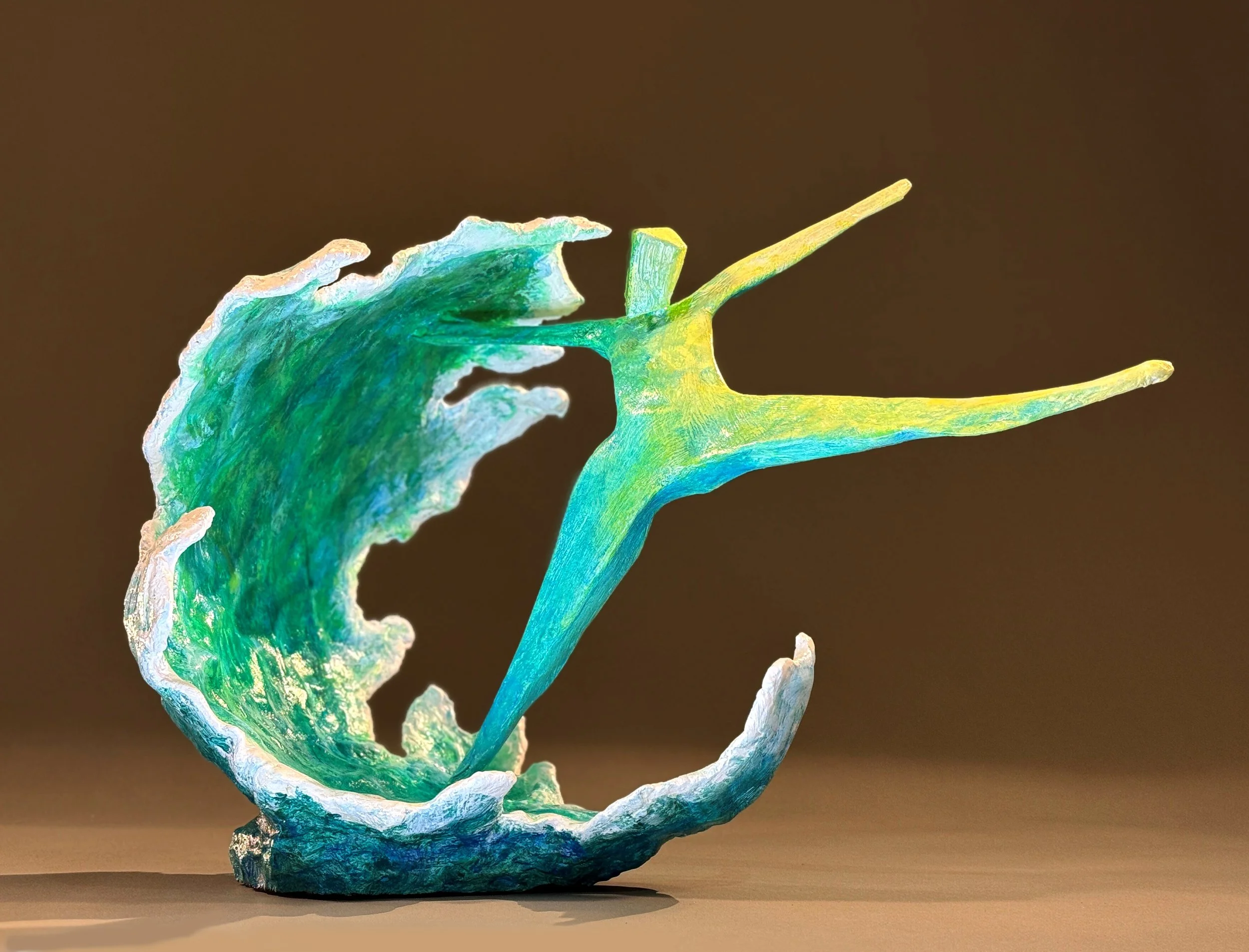
Escape” is a freestanding mixed-media sculpture capturing the charged dynamic between human form and elemental force. An elongated figure leaps forward—part dance, part escape—emerging from the arc of a breaking tsunami wave. The image is reminiscent of Katsushika Hokusai’s “The Great Wave”.

The wave curls in richly textured greens and turquoise, its foaming crest contrasting with the figure’s smoother, radiant surface, which shifts from oceanic blues into luminous yellow-greens. The color transition suggests transformation—human energy born from, and propelled by, nature’s power.

Sweeping negative space and circular movement guide the eye around the form, balancing tension with grace. The piece evokes resilience, release, and the exhilaration of moving through chaos—less a frozen object than a suspended crescendo of motion and spirit.

Katsushika Hokusai’s famous woodblock print of The Great Wave was one of the inspirations for this sculpture with a human figure.

Changing Strategy for Changing Times

In my former life as a creative director, my role was to inspire my teams, push them to generate more unique ideas, continually refresh their perspective and generally never imitate their previous successes. In that role, I constantly studied how the creative process works, the triggers that moved people beyond ordinary to truly exceptional ideas. It was both fascinating and fun.

This year started off with a bang. January is usually an indicator for the rest of the year. I was extremely optimistic. Then came the flood of executive disorders destroying our vision of democracy. I was angry, uninspired, unmotivated and generally out of good ideas. This never happens to me.

Nearly two months of projects started and left unfinished was enough. I shared my frustration with my studio neighbor Dianne Jean Erickson. She is incredibly creative and always inspiring. Dianne offered several books for visual stimulation. It helped

I keep a stack of small abstract watercolor and acrylic studies tucked away. Last week, I cleared about 8’ of wall space, tacked a 3’x3’ sheet of paper to the wall and started painting. Five days and four paintings later, I am out of my rut. It feels great to push a large brush around and be consumed by the evolving image. I haven’t abandoned masks or sculptures. There are still several of those in the works. But, this creative diversion will alter how I view 3-dimensional work in the future.

I titled this one “When I Saw the Wolf”. After an hour of exploring shapes and values, I saw the profile of a wolf. Once seen, I couldn’t ignore it. From there, it was a process of making it not too obvious, but still ominous.

See video of the evolution from first marks to finished painting.

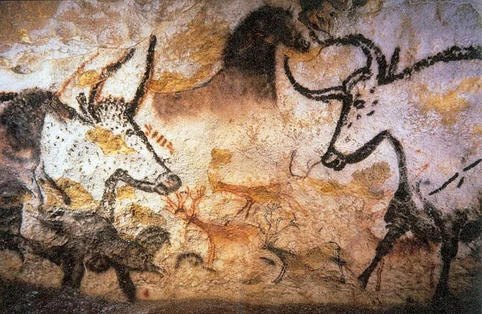
The creativity of Lascaux

Cave paintings like those at Lascaux often conformed to the dimensional features of the cave walls. The artists took advantage of bulges and cracks of the irregular surfaces to create dynamic images. Deep inside the caves, a flickering fire was the only illumination. The movement of highlights and shadows produced an illusion of animation. The earliest artists understood multimedia.

As art “advanced” to more sophisticated techniques, cave walls gave way to cathedral walls and ceilings. Pigments and brushes evolved to offer artists broader choices. Wood panels became the substrate of choice, later replaced with stretched canvas or linen. There are many reasons for this transformation. Transportation of images may have been a primary driver for stretched fabric.

Somewhere along this evolutionary path, the viewing experience suffered a serious setback. Flickering storyboard images across an undulating cave wall created an interactive experience. The regularity of a flat, rectilinear canvas restricts the creativity of the artist. Our Flatland of perception isn’t limited to the canvas. Look at your phone or a TV screen. Flat images confined to a right-angled box limits your view and your imagination. Thinking “outside the box” suggests an extension of the X and Y axes. Bigger boxes or irregularly shaped boxes still severely limit your perception.

Cave paintings at Lascaux followed the contours of walls and ceilings enhancing the dimensionality of the figures.

Of course, not all artists subscribe to this limitation. Rene Magritte, Joan Miro and many others explored painting on 3-dimensional surfaces. The Y axis changes everything for artists and their art’s relationship to viewers. Moving from 2D to 3D changes how the brain perceives and expresses ideas. A painter tries to create an illusion of depth and space on a 2-dimensional surface. A sculptor works with real depth and space to create an experience that physically moves viewers in and around the multiple surfaces.

Creating sculpture is synonymous with creating interactive space. Engaging the viewers’ brain beyond the boundaries of a flat surface is an experience that literally has more dimension. The walls of Lascaux may be high relief instead of actual sculpture, but the masters who created those images understood the multidimensionality of perception.

Cave paintings at Lascaux followed the contours of walls and ceilings enhancing the dimensionality of the figures.

"Unspoken" chosen for Gallery Without Walls, Lake Oswego, Oregon

For the past year, “Unspoken” has been on exhibit in Lafayette, Colorado as part of their Art on the Streets program. I will retrieve the sculpture in April and bring it back to Oregon.

In July, it will become part of the Gallery Without Walls program in Lake Oswego. It will be mounted on the southeast side of 1st and Avenue A and will remain there through 2027. I am delighted to be participating in this excellent program which includes a number of sculptors whose work I admire. I am also flattered with the prime location the committee chose for my piece.

The video below shows the evolution of the concept from sketches through the 18” maquette titled Binary Orbit, to the final 6’ steel, foam and fiberglass sculpture. When I created the original piece, I had not intended to enlarge it. For years, I had considered scaling one of my pieces. Encouragement came frequently from former employer, Marty Eichinger who, from our very first meeting, insisted I work bigger. When a pile of high density urethane foam scraps were offered to me, it was time to go large.

I am still holding enough foam to create another large piece. Many of my small sculptures will scale to a larger format.

I think, therefore I create possibilities.

Visualization to realization is a process of imagining something in such exquisite detail, it manifests in reality. If you can perceive something in your mind with such clarity, it awakens you to experiences and aids in decisions that bring that vision to life.

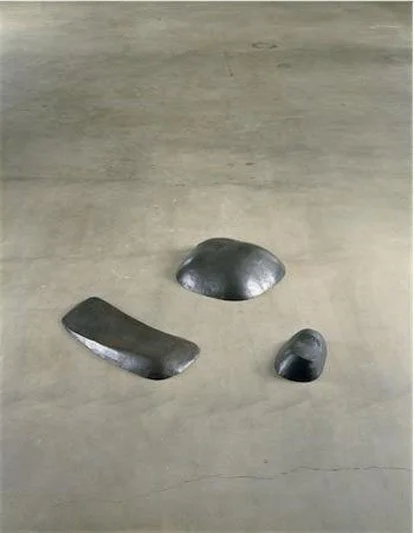
stone of spiritual understanding

The Stone of Spiritual Understanding Imagination has no boundaries.

Attention and intention create experience. Some will say this is bunk. I suggest they have not fully invested in the visualization phase. They have not been patient enough for that reality to materialize, or they are too deeply embedded in assumptions to recognize the options that appear.

In Deviate - The Science of Seeing Differently author and neuroscientist Beau Lotto poses a simple question: Do humans see reality? We don't. Everything we know is constructed by memory, assumptions and expectations. Only 15% of what we see comes through our sense of sight. The other 85% is fabricated by our brain. Our thoughts are our limitations. We cannot comprehend infinity.

In physics/philosophy, the concept of a multiverse or a many worlds interpretation of reality allows for infinite possibilities. Everything, everywhere, all at once. We are only able to experience one reality at a time. That reality is where our knowledge, assumptions and comfort zone converge. According to Lotto, if we change our brains we can release ourselves from the past. We unleash creativity and an entirely new realm of possibilities. We can realize anything we can visualize because all of those possibilities exist in the multiverse. (Here’s Why We Might Live in a Multiverse – Scientific American 3/6/2024)

The multiverse is an endless unfolding of universes. Together, they comprise everything that could exist: the entirety of space, time, matter, energy, information, and the physical laws and constants that describe them. This concept has been considered as far back as the ancient Greek philosophers. It has evolved and has been debated in various fields, including science fiction, cosmology, physics, and philosophy. Some argue that it is a philosophical concept rather than a scientific hypothesis, as it cannot be empirically falsified.

I have lived my entire life believing there are far more possibilities that we perceive. It helps explain some of the mysteries of ancient civilizations. They were able to visualize and experience other realities. the art they left behind is enough to convince me of that. There is substantial thought by minds much more qualified than mine to substantiate this idea. Creativity is undervalued whenever we rate an idea as impossible. For every vision imagined, its reality is out there.

Creative Continuity - Inspiration from the past

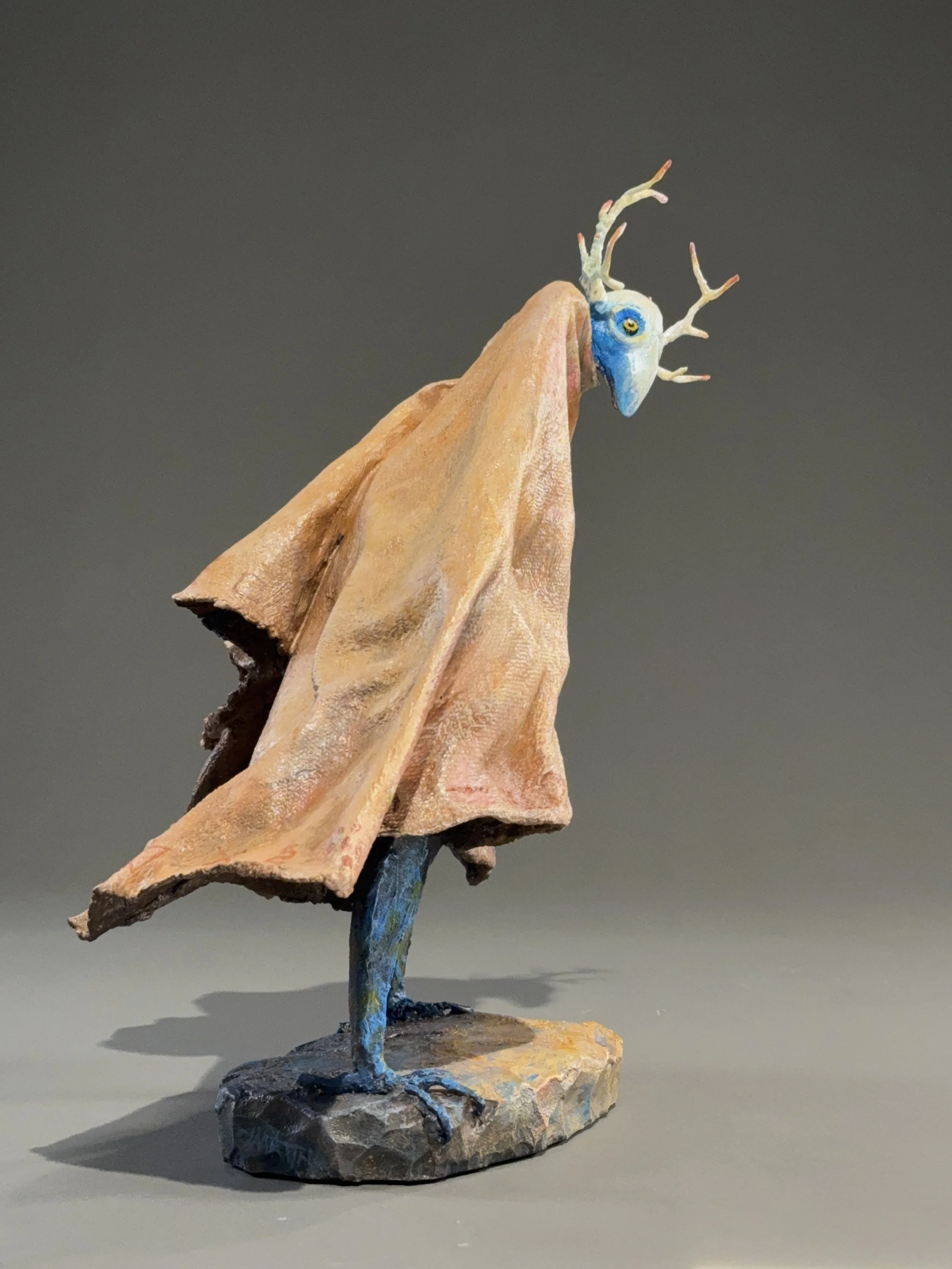
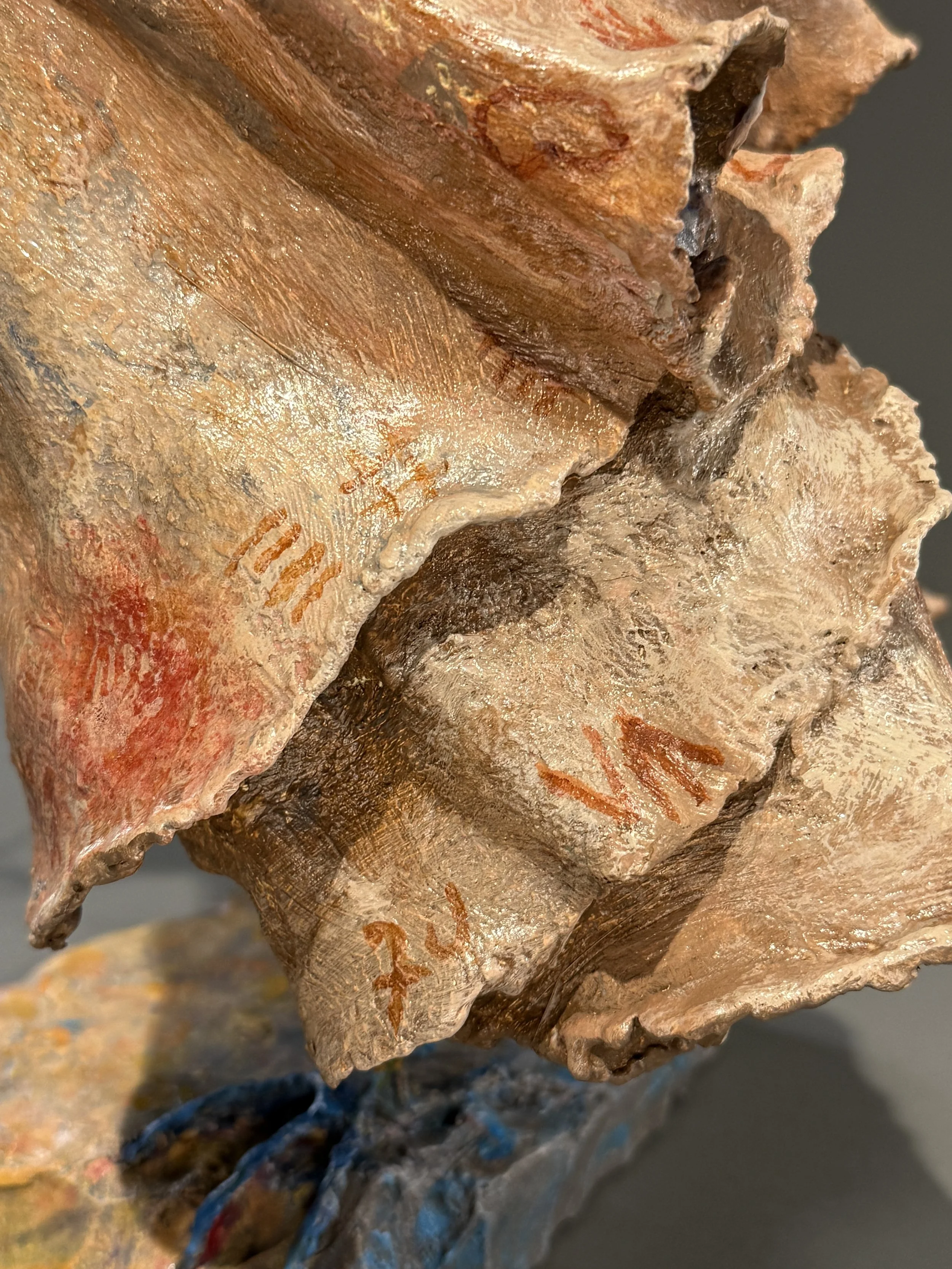
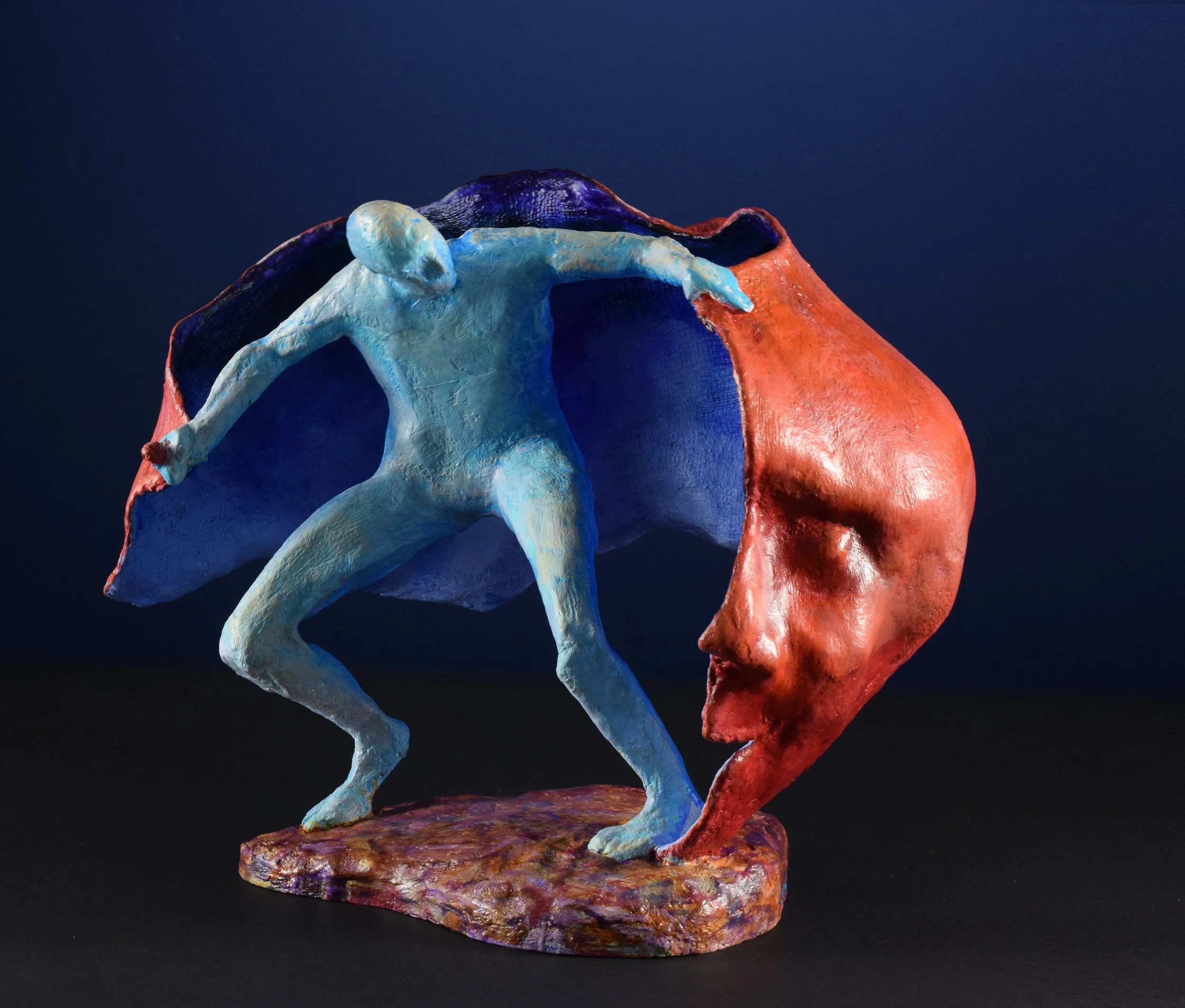
“Dream’s Cape”

I make a point of not repeating myself or duplicating previous works. In fact, if I tried to copy a piece, I would quickly find ways to improve the original. Before long, it would be a unique piece.

A few weeks ago, I pulled “Dream’s Cape” from the shelf. The original piece was created in 2019. I always felt it didn’t go far enough. I started sketching alternatives. Within a few minutes another character emerged. While the underlying concept has similarities, the end result is a very different piece with a very different feel.

“Shaman” also required a few new techniques. I visualized a gold leaf interior. However, in construction, that was overpowering. A few glazes of Alizarin Crimson turned the gold to a more copper feel. It kept the richness but subdued the high reflection of the gold.

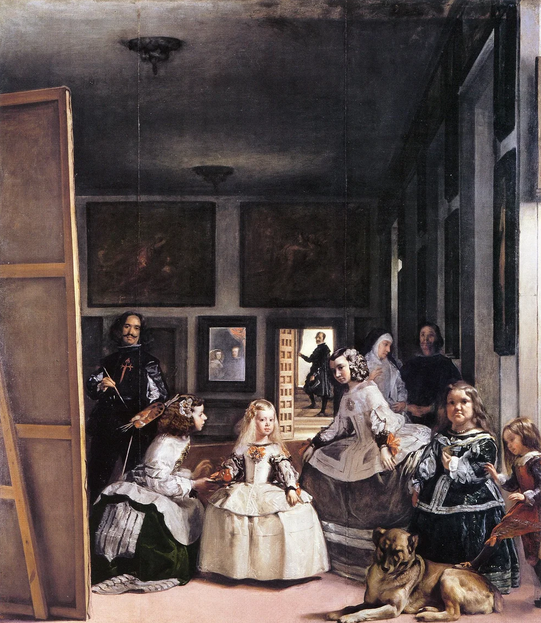
Diego Velazquez as sculptor of space.

Velazquez Las Meninas analyzed

"Las Meninas” 1656 by Diego Velazquez. 125.2”× 108.7”

One of many high points from a recent trip to Spain was a day at Museo del Prado. My long-time goal was to see paintings by Velazquez in person. As a court painter for the King of Spain, most of his paintings remain in Madrid.

Velazquez is one of the best painters of all time. In his later works he demonstrated a mastery of not just depth but of a three-dimensional experience on a two-dimensional surface. He is sculpting on canvas, drawing your attention into, around and through the space with masterful composition. “Las Meninas” is more than a scene of the life of Spanish Royals. As you view the painting, you are standing in the same position as the King and Queen, the subject of the painting. He is painting you as you watch and everyone in the painting is aware of your presence. The one subtle hint that explains this spacial masterpiece is the reflection of the King and Queen in a small mirror at the center of the painting.

Many great painters have managed space and depth successfully. I am unaware of any other painting that has turned the viewer into the subject of the painting. In doing this, Velazquez has made not only the painting, but the act of viewing the painting a 3-dimensional experience equal to experiences created by sculptors.

Dreams of Elders

Relatives long gone come back from time to time through dreams. It has always been a good experience. It usually makes me wonder what triggered that visitation. Was there a message? A warning? Or, more likely with my family, a joke?

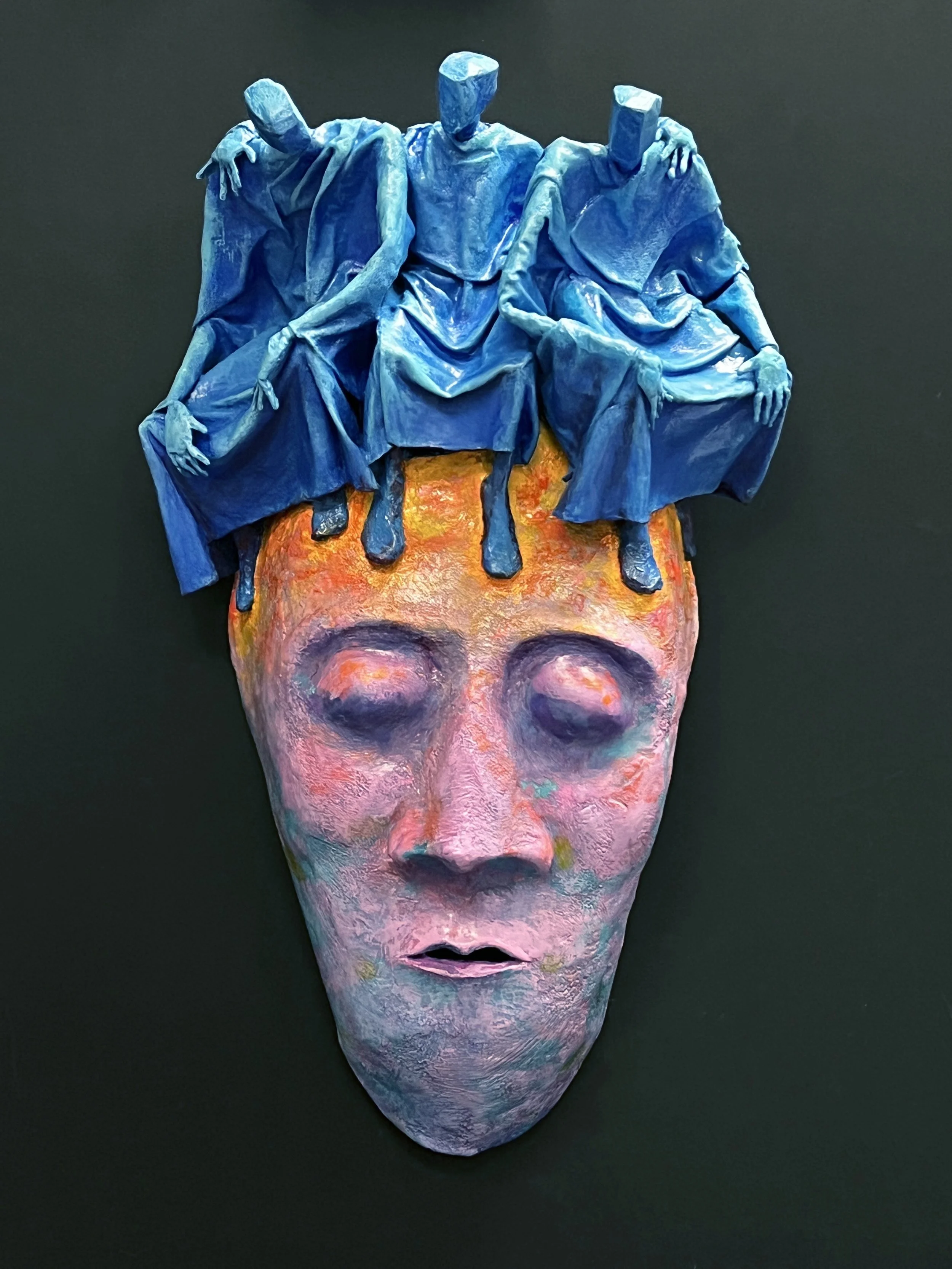
This mask was full of challenges. I had never rendered fabric before. Nor had I ever tried to position multiple, fully-rendered figures on top of a mask. But, what fun is a project without problems to solve. The larger challenge with this one was how to paint it. I’m not sure this photo is fully accurate. The mask has a glow just below the figures.

Mixed media: 21" x 13" x 5".

See details.

Deja Vu: The Persistence of Possibilities

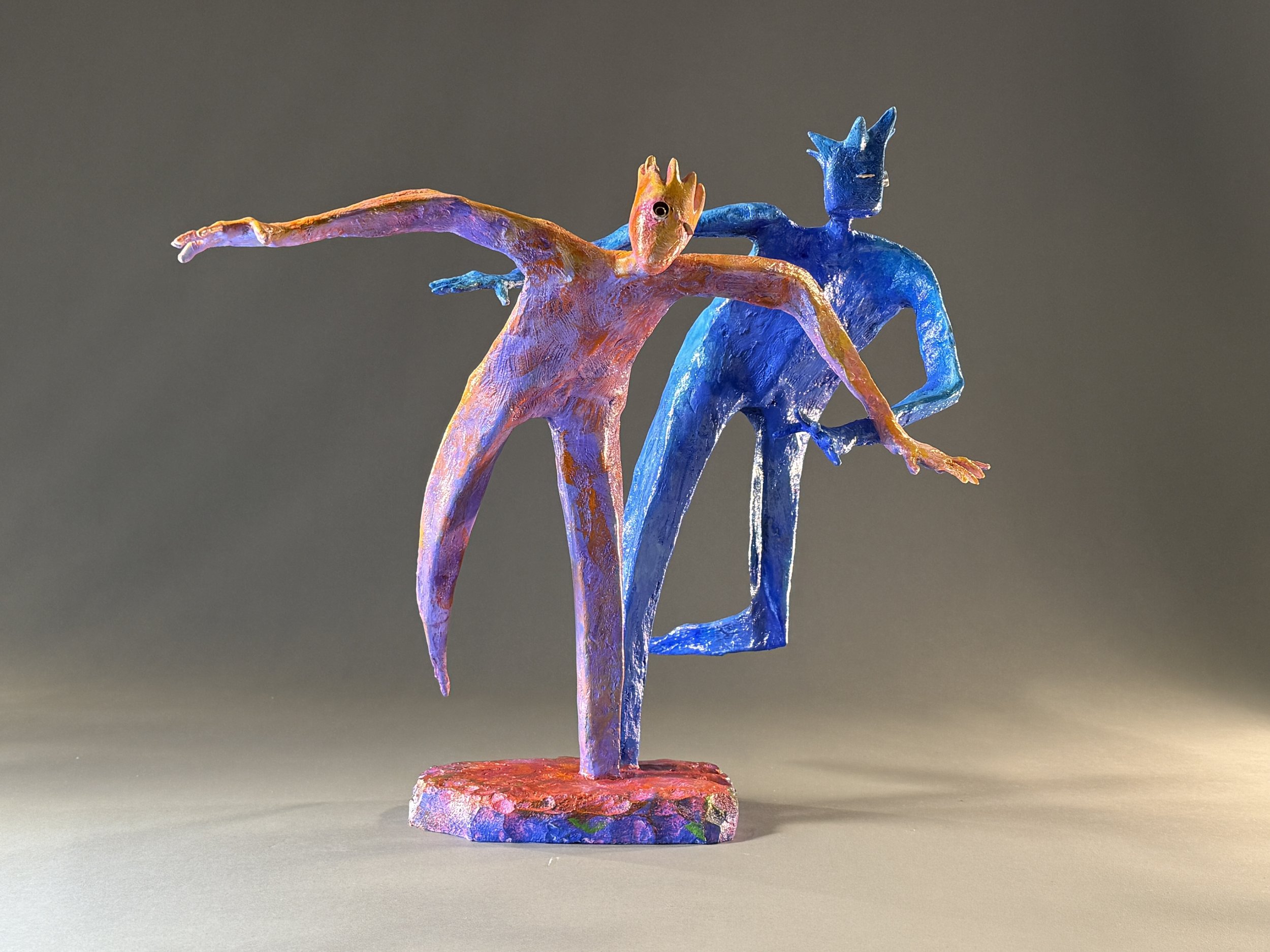
Deja Vu” - We have been here before.

Time is an illusion. There is no past, no future. There is an infinite “now”. The “Many Worlds” theory of quantum physics acknowledges that all possibilities exist at once. Through normal consciousness, we perceive one sequential path of possibilities. When our awareness encounters one of these infinite other worlds, it feels familiar because it is another version of what we are experiencing. .

That might explain what we experience as déjà vu. Literally translated from French, it means “already seen.” It describes an illusion, a memory of a scene or event that you are experiencing for the first time.

This sculpture suggests many things: a dance, a relationship, lovers, twins, opposites, etc. I began this piece with the concept of multiple variations of the personality encountering each other. The term of déjà vu quickly came to mind. When we see our thoughts reflected we are seeing through a portal in reality. I believe our ability to comprehend the complexity of consciousness is a result of how little we actually know about nature.

One surprise I encountered after shooting this video was that both figures, while rotating around each other also appear to be rotating on their own axis. It’s an illusion.

"Comfortably Numb" erases the boundaries between dimensions

sculpture and painting combined

Comfortably Numb” is a painting with sculpture mounted in front of it.

Some pieces create themselves. When that flow begins, it’s an amazing experience. Most artists know this magical spot though it doesn’t happen often enough. At some point, you realize you are not creating, but acting as a conduit for the creation of a work of art. It’s thrilling, humbling, mystical, spiritual…

Comfortably Numb” was one of those pieces. From a couple of brief sketches, I saw the concept and its execution clearly. The figure took very little time to create. The gesture came together effortlessly. The canvas had to support the sculpture invisibly for the illusion to work. Even that was a short problem-to-solution step.

I did a rare thing at that point. I stopped working on the piece. I stepped back to enjoy what was happening. When a piece practically creates itself, the experience passes too quickly. The magic passes in a short, intense moment. With “Comfortably Numb” I chose to enjoy the process completely. So, I set the canvas aside unpainted with the sculpture mounted to the surface. And I looked at it for a week or two.

Then, in a very short session, I blocked in the 2-color background. It was a simple wash of Manganese at the bottom and Pyrrole Orange across the top. It had a Rothko vibe. I left that alone and simply observed for another week or two. Thinking but not doing. One morning the rocks and clouds became. Gradually, through the next week, the reflection and refraction of light appeared. Effortlessly. The most playful part was enhancing, but not fully rendering a shadow cast onto the surface by the figure. Suggesting waves near the horizon, the illusion was complete.

I have studied the illusions created by Rene Magritte. The geometry of Comfortably Numb is spatially similar to several of Magritte’s 2- and 3-dimensional works. Equally important are his titles. Each image makes a statement. Each title offers a different perspective. Between the viewer, the art and title a question is forged. And you are engaged.