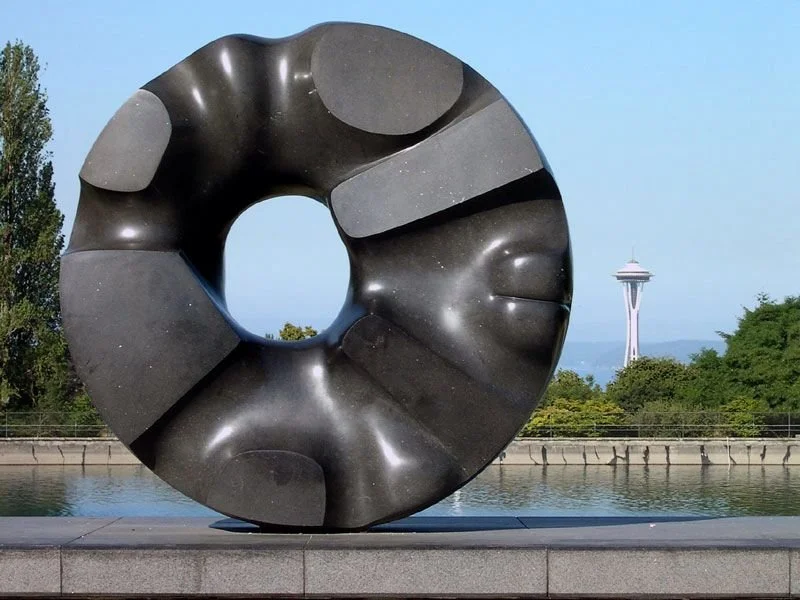
“Black Sun” by Isamu Noguchi used negative space to invite viewers into the sculpture.
Long before I became a sculptor, I was hypnotized by Isamu Noguchi’s works. My first encounter was on Capitol Hill in Seattle where his “Black Sun” stands above the city. The black granite disc has an off-center void and multiple indentations carved and polished. The screaming quiet of the piece stops time. Like many of his works, they draw you into a meditative state by being in their presence.
The Japanese American who never felt truly part of either culture was a master of space and form. He considered the sculpture as “the art of space.” But more importantly, he was acutely aware of the viewer’s relationship with both.
Noguchi believed sculpture was something to be completely experienced, not a remote observation. You become an integral part of it.
Injecting the viewer as the third element is so well integrated into his concepts it is not easily recognized. He came to this perspective at a young age. His sister who studied dance perhaps ignited his awareness of the viewer’s role in space. That awareness may have led him to create public parks where people, form and space contributed and benefited from the relationship. He saw environment as sculpture whether creating a park, an installation, or set designs for dance performances with choreographers Martha Graham and George Balanchine.
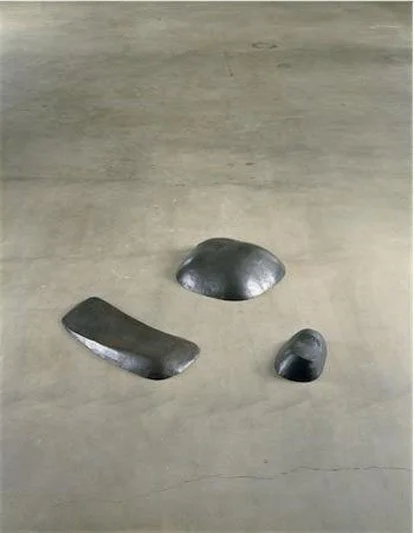
“Garden Elements” creates an illusion where the floor is transformed into water.
I directly experienced Noguchi’s works again in 1980 at MOMA San Francisco where “Stone of Spiritual Understanding” and “Garden Elements” were among the sculptures exhibited. Both actively demonstrated how observation makes you part of the space. I describe my experience with “Stone of Spiritual Understanding” in a separate article.
“Garden Elements” literally changed my perception of the floor beneath my feet. Three rock shapes with flat bottoms are arranged on the floor of the gallery. The illusion is that they are poking through the surface of water. The wooden floor becomes liquid. I am now standing on water. Noguchi is messing with my head and forcing me to reconsider how I move within space and landscape. I know of no other sculptor who has been able to engage viewers in such a revelation.
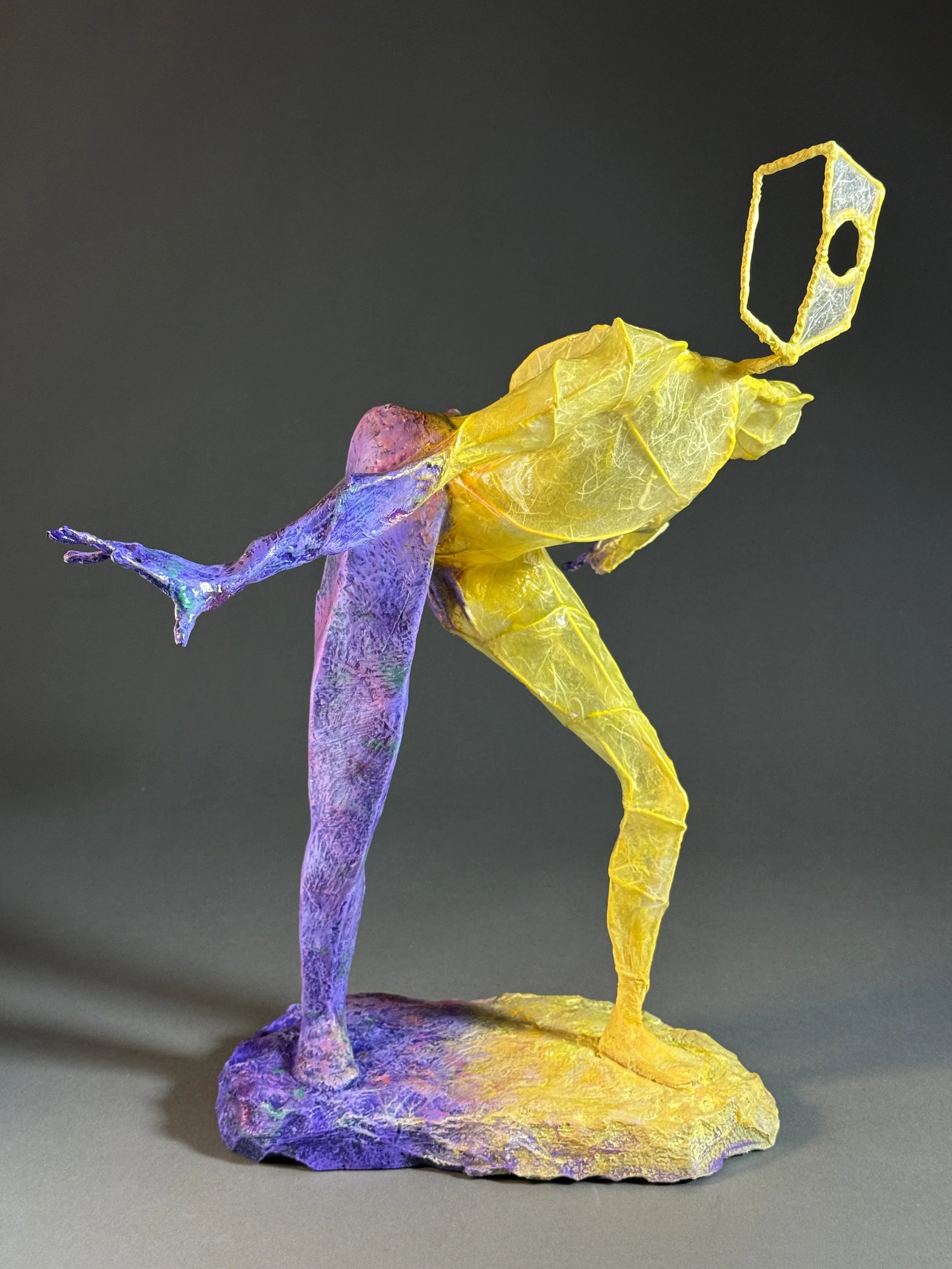
When viewers imitate the gesture of my sculptures while observing them, I thank Noguchi for his teachings. “Transition” is a mixed media sculpture.
While my sculptural style varies greatly from Noguchi’s, I feel my work is validated when I see someone observing one of my pieces and leaning or bending to mirror the gesture of the figure. It tells me they have joined the relationship within the space and form. That intimate connection between viewer, form, and space is what Noguchi taught me to pursue.