Chas Martin: Sculpture - Masks - Paintings

Intuitive art - creativity beyond logic

Chas MartinComment

I have spent most of my career trying not to conform but to follow my own path. My goal has always been to create unique work regardless of the medium. Even if I try to imitate something, I can’t. My imagination immediately seeks a tangent and off we go in a new direction.  

Intuitive sculpture - works in progress. These are driven by curiosity rather than logic as I explore ideas.

There’s a downside to this creative drive. I never know how to categorize my work. It is exploratory, though not in the cutting-edge, shock-value, boundary-pushing sense. It’s more internal, personal, spiritual. It’s fed by what I read. I read everything from physics to metaphysical to philosophy.

Physics has always provided a source of inspiration for me. What we don’t know is a much larger and grander realm than what we do know. Recently, I’ve been studying the concept of consciousness. It’s very much related to quantum physics. The observer alters the observed. Although we may both observe the same event, we see it differently based on our experience and ability to process what we see.

Last night while reading “The Lens of Perception” by Hal Zina Bennett, I rediscovered the term “Intuitive art”. A timely coincidence? More likely a synchronous event. Searching for a definition, I found many, all either too general or focused on painting. So I dug a little deeper into the concept of intuition first.

Merriam-Webster defines intuition as “the power or faculty of attaining direct knowledge or cognition without evident rational thought and inference.” Logic has no real influence here.

Artist, Cheryl Bannon defines intuitive art as “a spiritual, connected process that allows the art to lead the way as images form through the layers of paint and other media. Intuitive art is a process of creating art using an inner awareness that is heart centered and does not rely on analysis or head-based questions. It is a way of creating that is about connecting into your emotions and responding to what feels right.”

I experiment with archetypal characters and situations – with the narratives that connect us rather than segment us into micro categories. My process is definitely intuitive, driven by anything but logic. So I am going to wear this mantle for a while and see if it fits.

Perception: What you see is what you think

Chas MartinComment

I have been fascinated with the concept of perception for a very long time. I recently read several books on quantum physics (very low level explanations) and realize how much of what we understand depends on perception. The act of observation changes the observed.

There is more to it than that. What we see is based on what we already know. The brain, a supreme pattern-matching machine, identifies any new visual input with existing patterns it already recognizes. When you see something truly new, it’s difficult to comprehend it as something unique. It simply gets associated with something you already understand and filed away accordingly.

Perception is a form of projection. We see what we expect to see. Nothing more.

suspended mobile - kinetic sculpture

The Creative Act: A Way of Being

Chas Martin

Rick Rubin is a legendary music producer who dislikes that description. He is much more than that. His recent book, “The Creative Act: A Way of Being” is not about the music business. It’s about the creative process and all the nuances that turn ideas into greatness. It is a brilliantly conceived and articulately defined description of the process.

I listened to the audio version multiple times, then bought the hard copy. Each chapter is concise with a Zen-like spareness. His reading makes each topic even more poignant. The observations, examples and advice are all delivered with humility that comes from rich experience.

There are countless books on the topic of the creative process. Most are a waste of time. This one is truly different. It is an offering of thoughtful and useful wisdom. Read it.

This short interview with Rick Rubin on People I (Mostly) Admire includes a few specific examples of experiences cited in the book.

22 Insights from Artists on Collecting Art

Chas Martin

Leap 2022, Mixed Media on marble base. 16.75 x 8.5 x 7 in.

I was recently invited to contribute to an article on adding texture to your apartment - “22 Unique Ways to Bring Texture into Your Apartment” The article, compiled by Ryan Castillo of Redfin, appeared earlier this week.

The number and variety of perspectives by contributing artists is insightful. This informed mix of art buying considerations expands the criteria collectors usually include in their process.

It’s a short read. The insights are not limited to apartment dwellers.

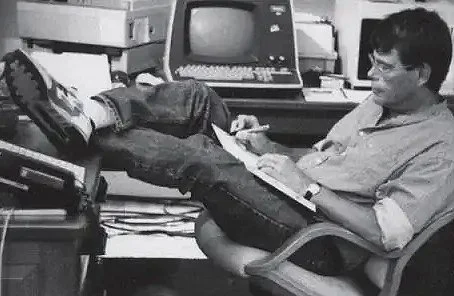
Stephen King “On Writing” and sculpture

Chas Martin

In 2000, author Stephen King published “On Writing” which crystalized his knowledge of his craft. In my studio, I recently listened to the audio book read by the author. His thoughts about creating stories based on situations and characters are very similar to creating sculpture.

King explains, “Stories are found things like fossils in the ground… Stories are relics, part of an undiscovered, pre-existing world. The writer’s job is to use the tools in his or her toolbox to get as much of each fossil out of the ground intact as possible…

“Plot is, I think, the good writer’s last resort and the dullard’s first choice. The story which results from it is likely to feel artificial and labored. I lean more heavily on intuition and have been able to do that because my books have been based more on situation than story…

“The situation comes first. The characters, always flat and unfeatured to begin with, come next. Once these things are fixed in my mind, I begin to narrate. I often have an idea of what the outcome may be, but I have never demanded of a set of characters that they do things my way. On the contrary, I want them to do things their way. In some instances, the outcome is what I visualized. In most, however, it’s something I never expected. For a suspense novelist, this is a great thing.”

King’s mission, first and foremost, is to keep readers in a constant state on page-turning anxiety.

As a sculptor, my mission is to keep viewers in a constant state of curiosity. My initial idea is also based on a situation. The character evolves in response. I have ideas for my characters, but I don’t tell them how to respond. I modify their gestures to tell their story.

The art of creating a novel or a sculpture is the art of managing information. What does the audience need to know? When do they need to know it? An editor will tell you to remove anything that does not build character or advance the story. What you leave out creates more suspense than what you leave in. With sculpture, what you leave out is not gone. That space invites curiosity. It gives viewers room to wander, to wonder, to interject their own experience into the situation, and to be engaged in the story. If that experience uncovers some pre-existing world, the story becomes a timeless archetypal metaphor.

The art of reaching the next level

Chas Martin

I was recently interviewed for the 8th quarterly issue of Subjectiv Journal, an anthology of Pacific Northwest artists and writers. It was an honor to be included among these extremely talented people.

The interview questions focused on my studio practices. I took the opportunity to discuss my challenge/solution process for generating ideas since that’s what I do in my studio. While it seems very natural to me, I forget that pattern-breaking, risk-taking and an appetite for potential failure is very foreign approach for many people.

The interview helped me to reflect, acknowledge and share all. Studio work is isolating. In one sense, it’s very safe because no one else sees the mistakes. On the other hand, many of the minor victories involved in creating a sculpture are not visible in the final piece.

I don’t have many rules in my studio. And those, I break constantly. There is one exception: Each piece must be significantly better than the last by some measure. If, at some point, I don’t see a piece reaching the next plateau, it’s time to step back and reevaluate. The “What if?” process is ongoing. When a solution surfaces that elevates the piece, I continue. Until then, I’ll observe, explore and reconsider. I may need to remove a head, an arm, restructure the gesture. Nothing is sacred except the goal.

This self-challenge/solution process is not something others see. They only see the result. The thing people regard as art is a simple record that this creative process happened. Art is in the making. It’s the process of coaxing, negotiating and wrestling an idea from ambiguous thought to tangible sculpture.

That’s what draws me to my studio every day. There’s always the promise of another challenge and the possibility of reaching the next plateau. It’s like running up stairs. When your rhythm is on, you reach a step or two at a time. You haven’t simply finished a piece, but reached a significant step above your last.


Portland Open Studios 2022

Chas Martin

It’s Open Studio season with artists all over the city opening their doors to the public. I’ll be displaying many new pieces including sculptures, masks, paintings and sketches. Several works in progress will be on display as well.

Please join me and several other artists in my building between 10am and 5pm Saturday and Sunday, October 8 and 9.

Location is 7830 SW 40th Ave., Portland. Additional parking is available across the street at the Post Office after their business hours.

Additional artists include: Brenda Boylan and Don Brown.


The balance of Shadow and Ego

Chas Martin

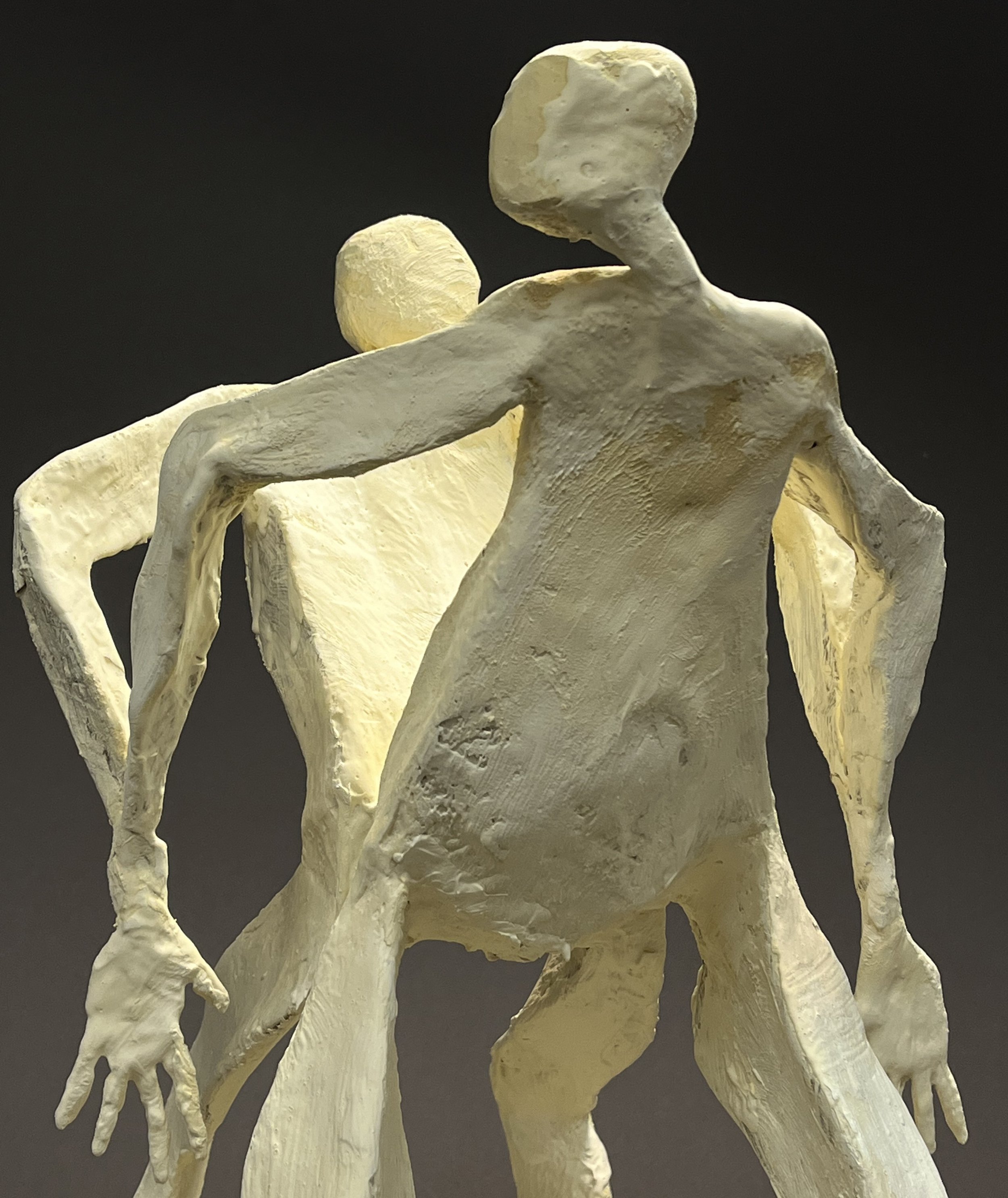
It is part of Western culture to consider the “shadow” as something dark, evil, dangerous or threatening. Jung saw it as is the portal to the Self. To pass through that doorway is to become who we really are. The shadow, when understood, is a source of renewal, revealing qualities unavailable to us through the ego alone.

balancing shadow and ego

Several of many sketches explored before the sculpture was created

It’s a concept that has resurfaced many times in my work and throughout my life. A numerologist once identified me as an eight. As such, I presumably have an ability to see and understand both sides of things. That ability served me well during my career as an art director where I had to see things through the eyes of the viewer. That perspective continues through painting and sculpture as well.

So when the shadow finds its way into a sketch, I usually welcome the opportunity to explore the point and counterpoint of the shadow and ego. I also find working with two figures more exciting than only one. It offers more special prospects and complexity to the composition.

In “Breakthrough” the shadow’s arms are the portal through which the ego passes. Each is dependent on the other to make this transition possible. The evolution of this piece from sketch to final sculpture was an adventure. Finding the relationship and creating the complimentary gestures were interesting challenges.

I have explored this relationship through several of my most recent pieces as well as a couple of other significant pieces of the past 3 years. I am sure I will return to this theme again.

Prize of Hope Award at Dell'Arte International

Chas Martin
Prize of Hope - Zandezi

On Saturday, June 25, I participated in the award ceremony for this year’s Prize of Hope in Blue Lake, CA. The event was hosted by Dell’Arte International and Aasen Teater, the Danish Institute for Popular Theater in Brødholtvej, Denmark. The 2022 Prize of Hope was awarded to the Zimbabwe Theater Academy. The evening festivities included a performance of the 2-person play, “Zandezi,” created and performed by Cadrick Msongwlwa and Ronald Sigeca under the direction of Lloyd Nyikadzino.

It was my honor as the commissioned artist for this year’s award which has traditionally taken the form of a mask. My process began viewing videos of the performance, reading the script, researching Zimbabwean mask styles and then producing about 50 sketches. After sharing my concept with Dell’Arte CEO, Alyssa Hughlett, I shaped the original mask in clay, created a silicon mold and cast three masks which were then painted. One mask was awarded to the group from Zimbabwe, one went to Denmark and the third is now in the Dell’Arte International collection.

The play (also performed several months ago at the Portland Playhouse here in Portland) has been described as a provocative, daring, and mind-blowing physical theater piece that challenges the criminal justice system. Zandezi is Zimbabwean slang for “prison.” The play questions if prison is for a rehabilitation or a place where innocent people become hardcore criminals.  

Dell’Arte Institute and the Danish Institute of Popular Theater both focus on physical theater, a genre of theatrical performance that encompasses storytelling primarily through physical movement. In Zimbabwe, where 14 languages are spoken, the language of motion connects all.

 Dell’Arte has been offering the Prize of Hope with the Danish Institute of Popular Theater since 2008; past recipients include Universes (2018)Cornerstone Theater (2016), Tim Robbins & the Actor’s Gang (2008), and many more!

 My connection to Dell’Arte came through Tony Fuemeller, a locally-based master mask maker, actor, puppeteer, director and instructor. Many thanks for the introduction!

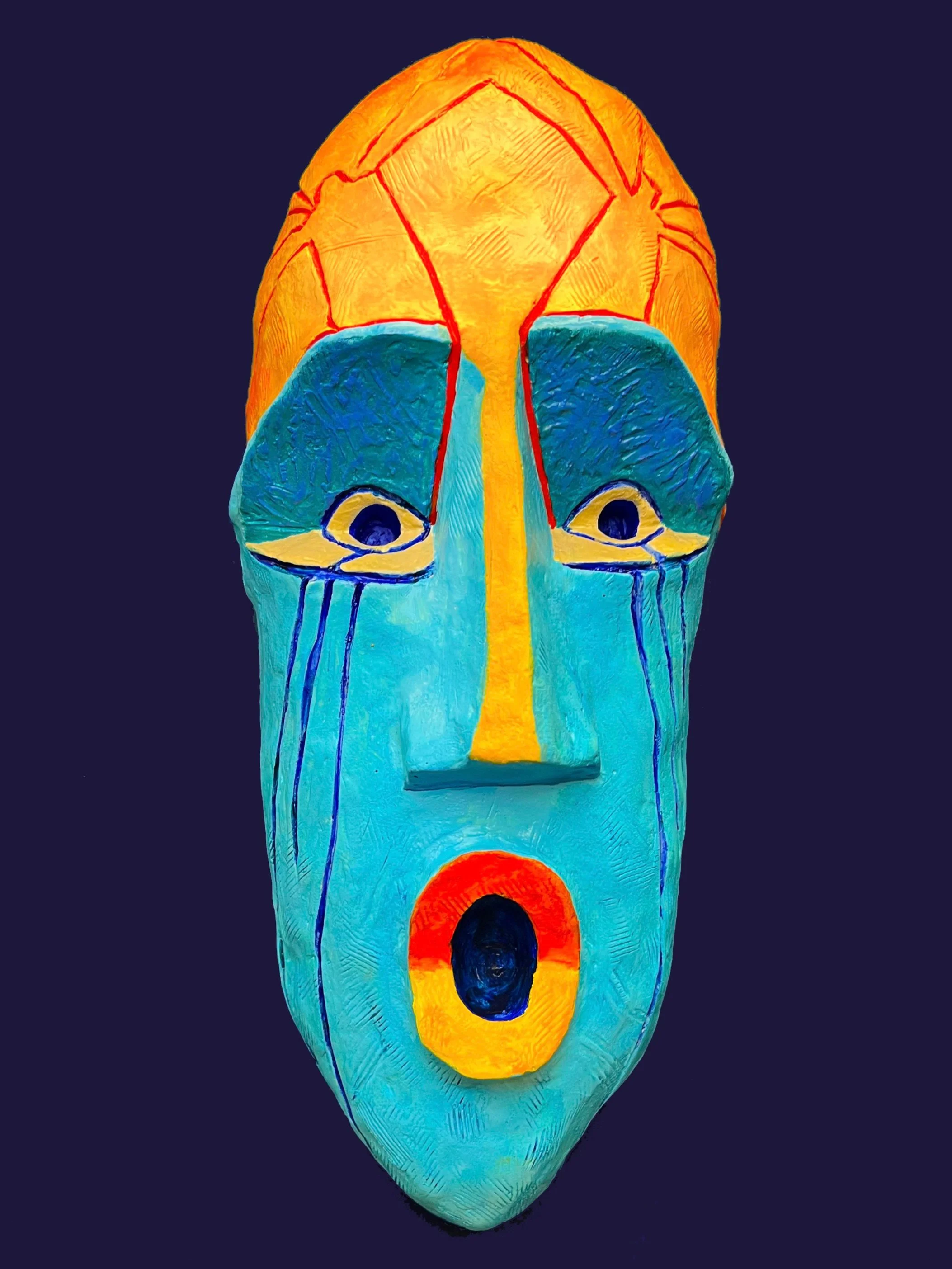
Commissioned mask for Dell'Arte International

The mask was inspired in part by traditional mask styles of the Zimbabwean culture. The elongated facial shape vaguely suggests a shield. While we can see the story through the eyes of the mask, the shield protects us from experiencing it directly.

Deep lines in the face are evidence of stress, worry, fear and unknowing – all emotions experienced by Philani. They also suggest tears. Upon further discovery, these lines symbolize the two actors. Their interaction is the story.

The mask includes two additional figures in the forehead. These two figures celebrate the physicality of the performance. Their arms appear in multiple positions at once. The implied motion of their uplifted arms suggests hope and resurrection. The color implies sunrise, a new dawn, another world where hope is real, where rehabilitation is supported, where justice can be served.