The evolution of Sleepwalker began, as all of my sculptures do, as a small exploratory sketch. This first phase can take up to 50 sketches to fully understand the character and the opportunities it creates to draw viewers into its space.
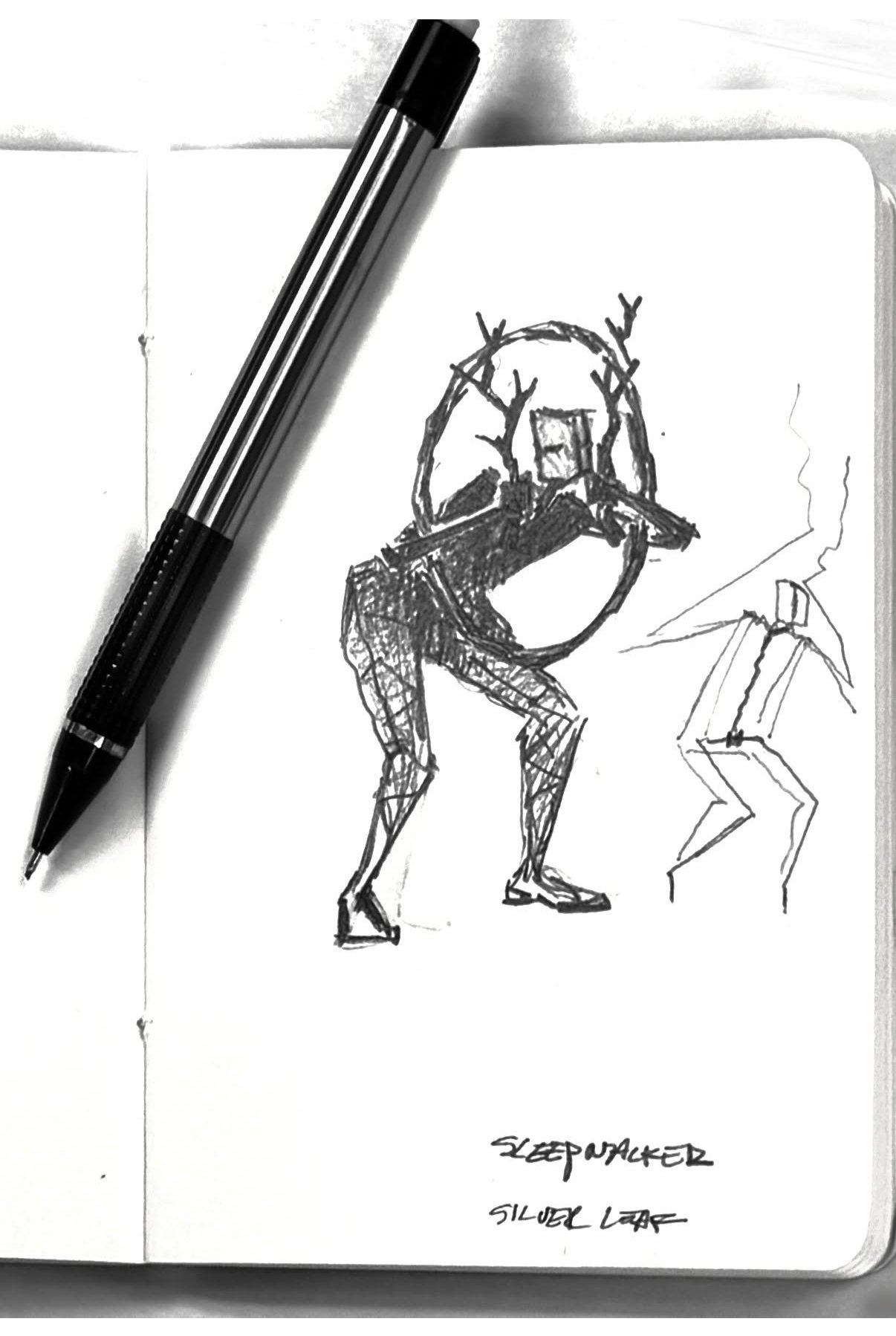
This piece didn't vary much from that first sketch to the finished work — a rare occurance. Most of the changes were structural tweaks, not conceptual.
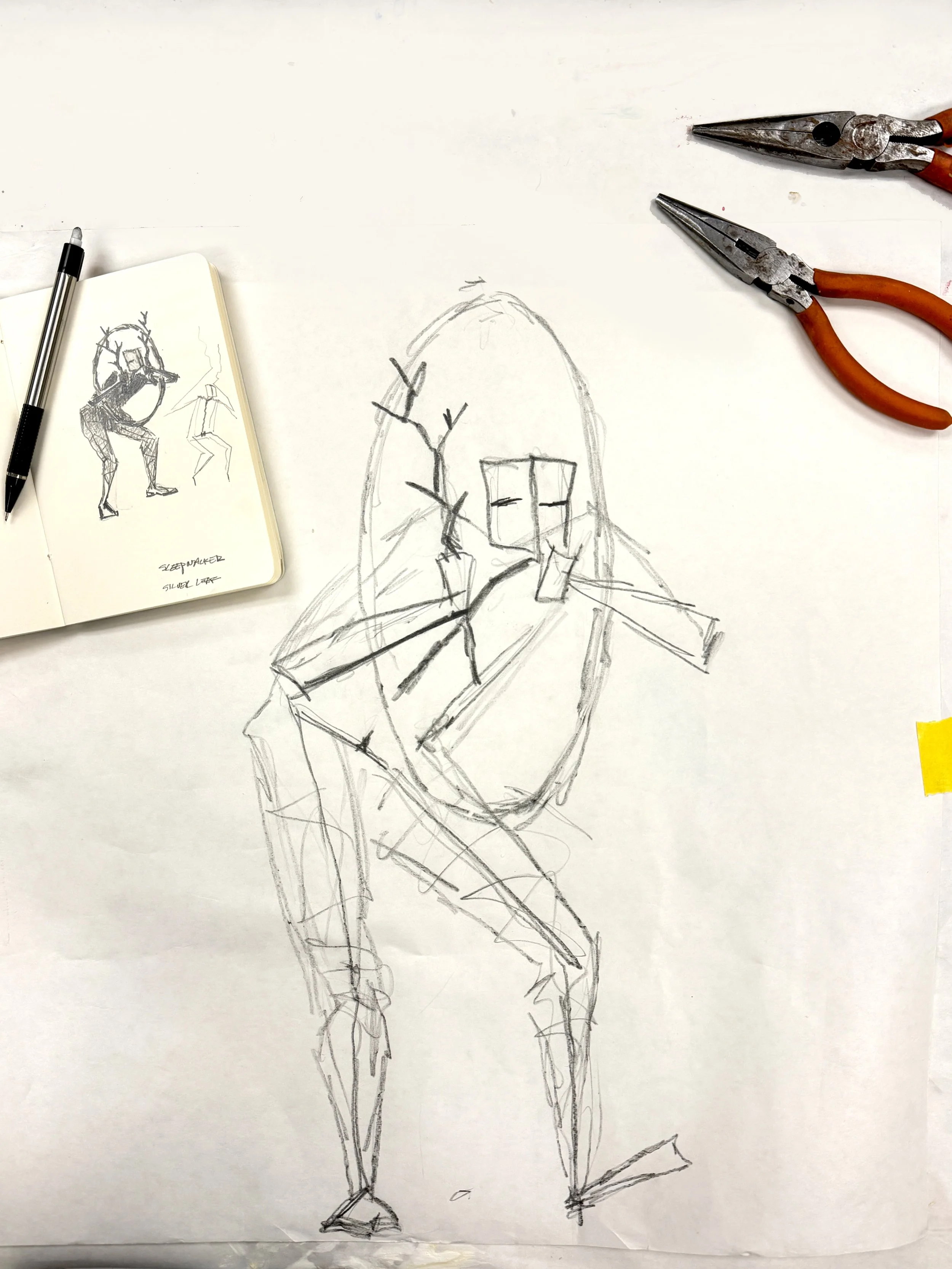
Scaling the sketch to a template begins the conversion two dimensions to three. This is an ongoing process of problem-creation/problem-solving.
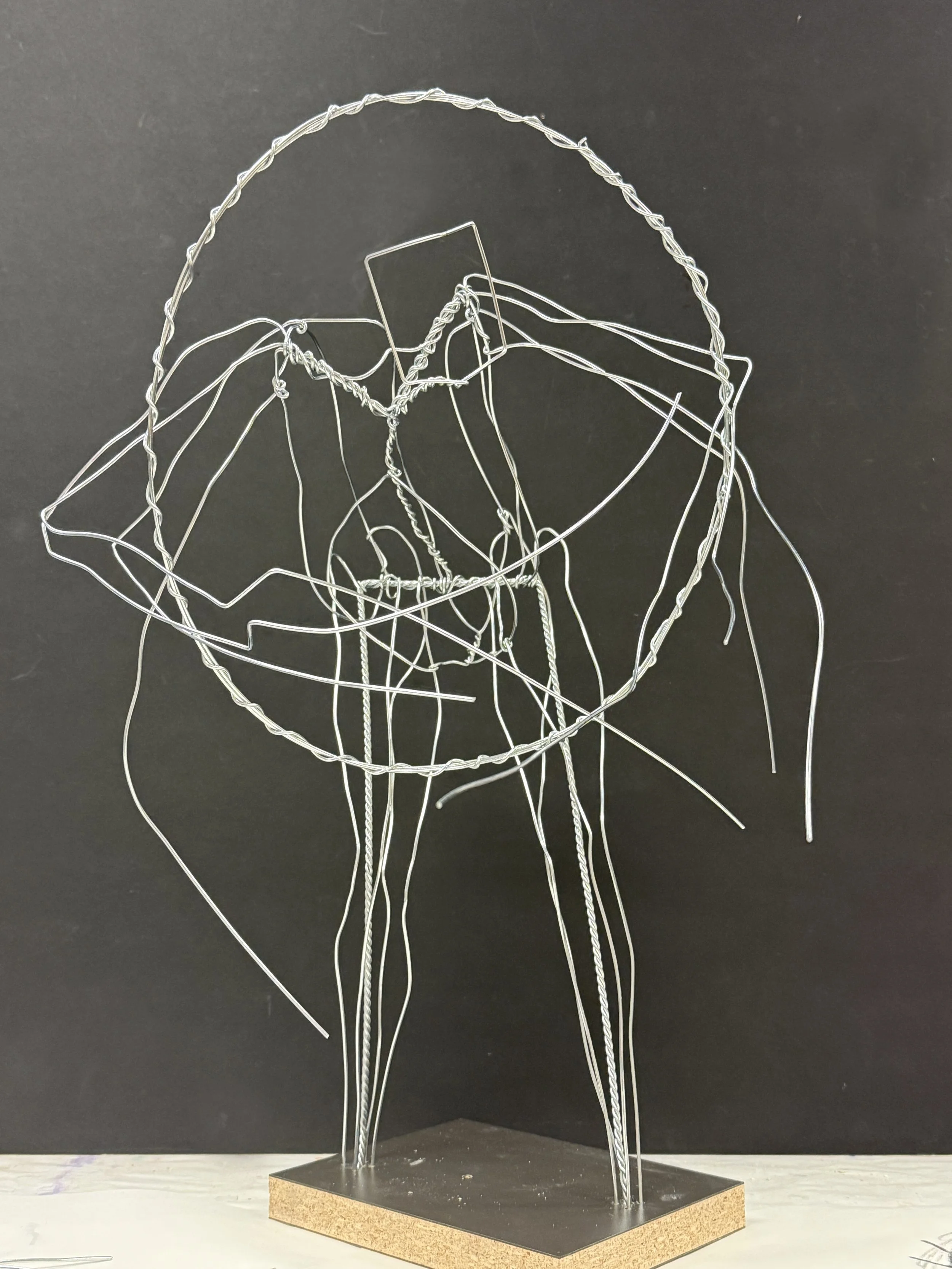
Initially, I saw the hoop as connected only to the arms. I wanted the legs to be semi-translucent paper and polymer which would have limited rigidity. The wire armature needed a third point of contact to make everything solid and able to support the weight of the upper body.
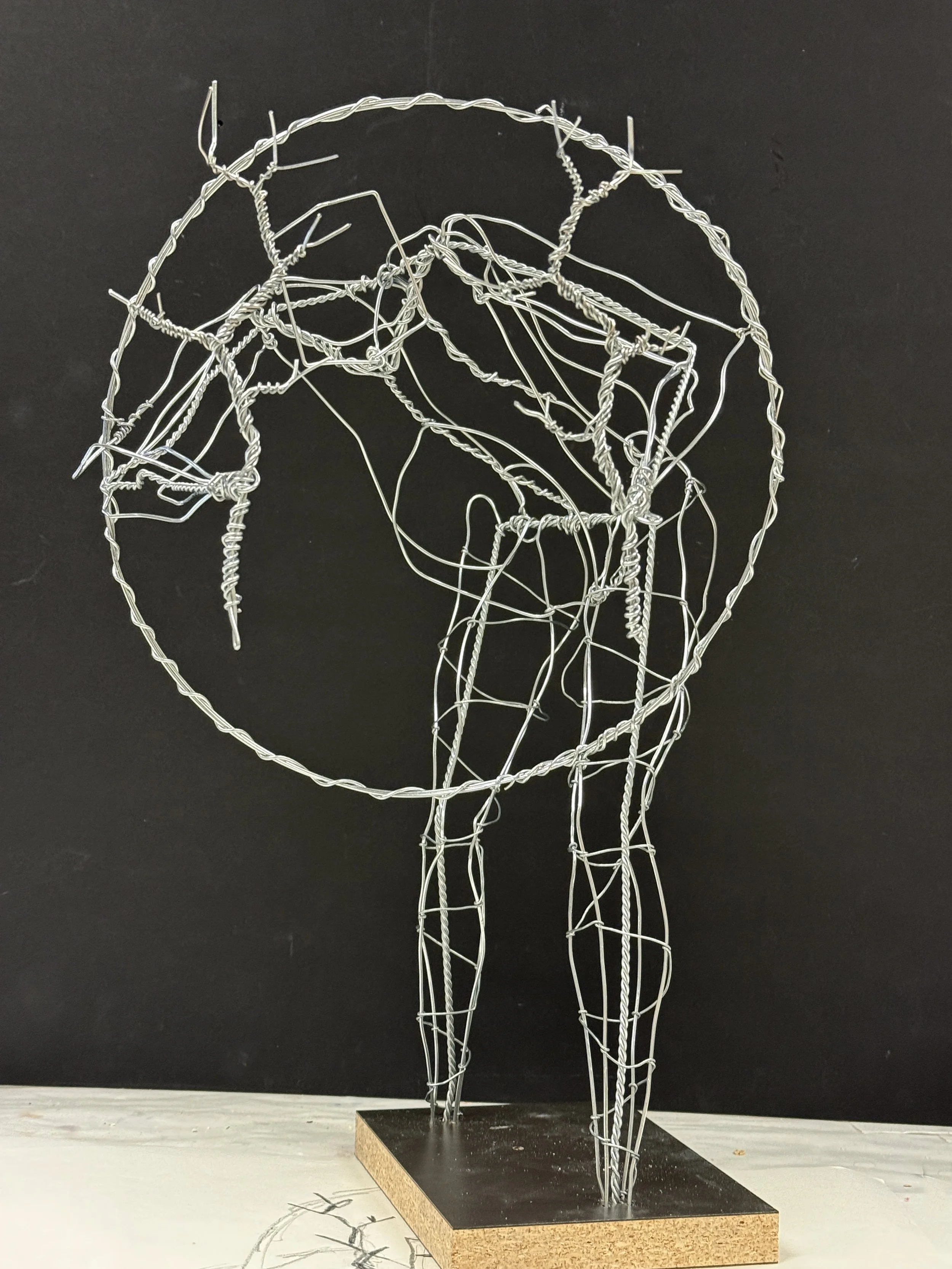
One surprise that came out of that structural work: the hoop is now attached to the figure at three points. It's not immediately obvious where or how — which is exactly what I wanted. The connection is nearly invisible and feels natural, not engineered.
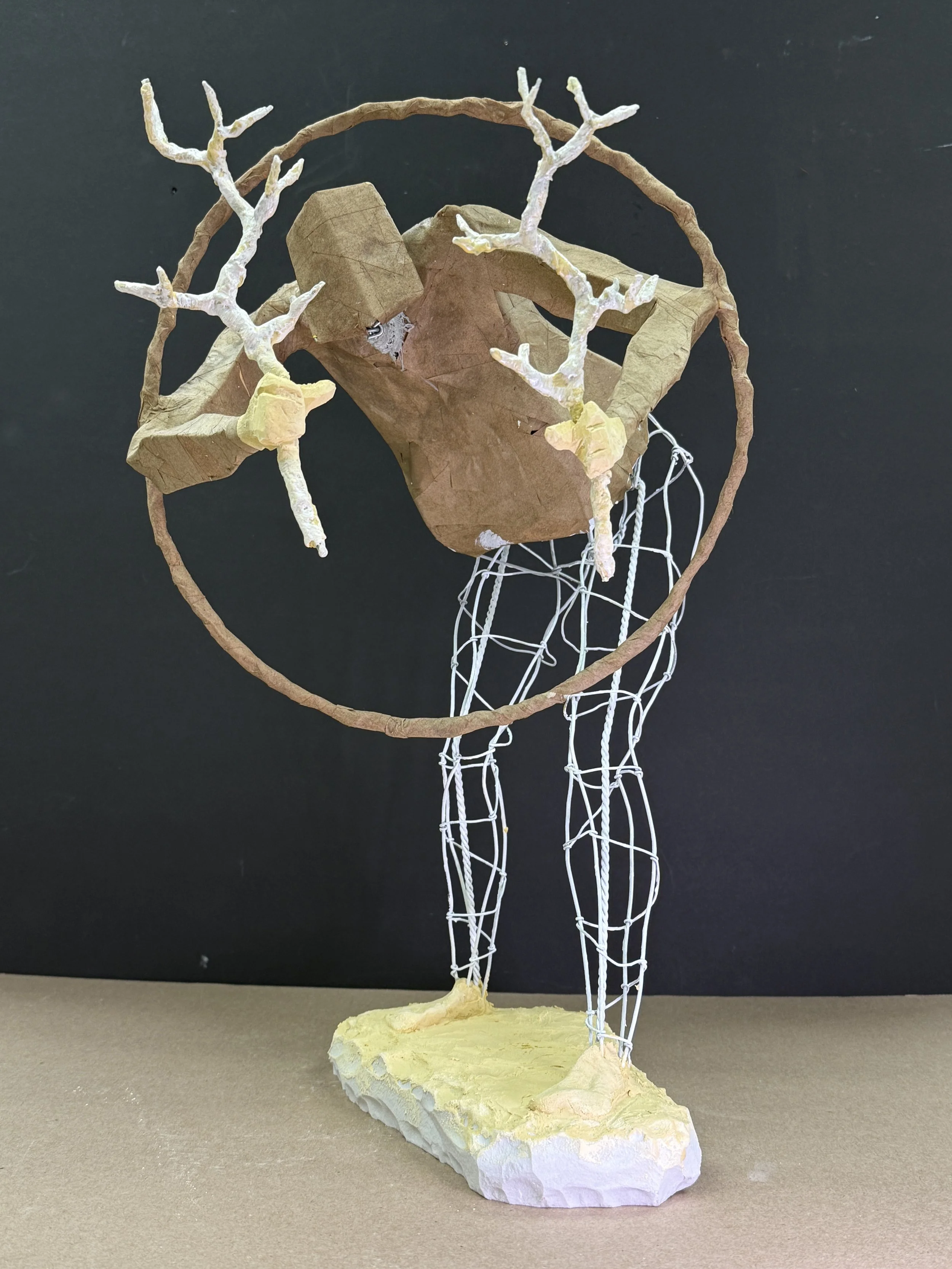
The figure was built up in layers. Opaque fiber and polymer-coated surfaces above the hips followed by a final plaster-polymer skin.
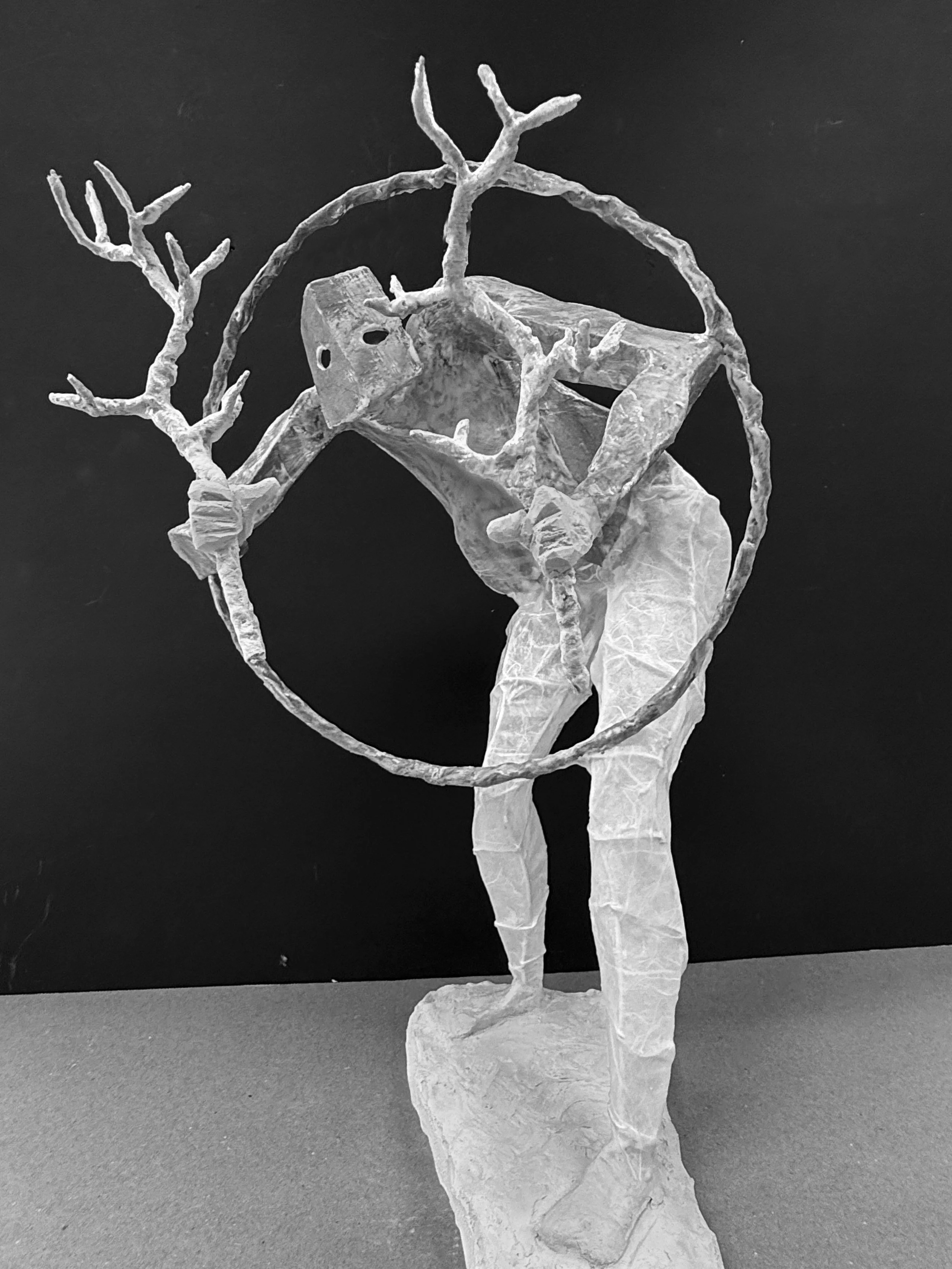
Translucent, polymer-saturated mulberry paper created semi-translucent legs which contrast with the opaque upper body.
One recurring technique I use is to invite viewers into the spaces created by the form of the sculpture. This is a philosophy I learned studying Isamu Noguchi. The viewer becomes part of the space, and therefore part of the sculpture itself. It makes the unanswered question presented by the figure that much more personal and engaging. Read about the original concept behind this sculpture: Sleepwalker: A Journey of Forking Paths.